
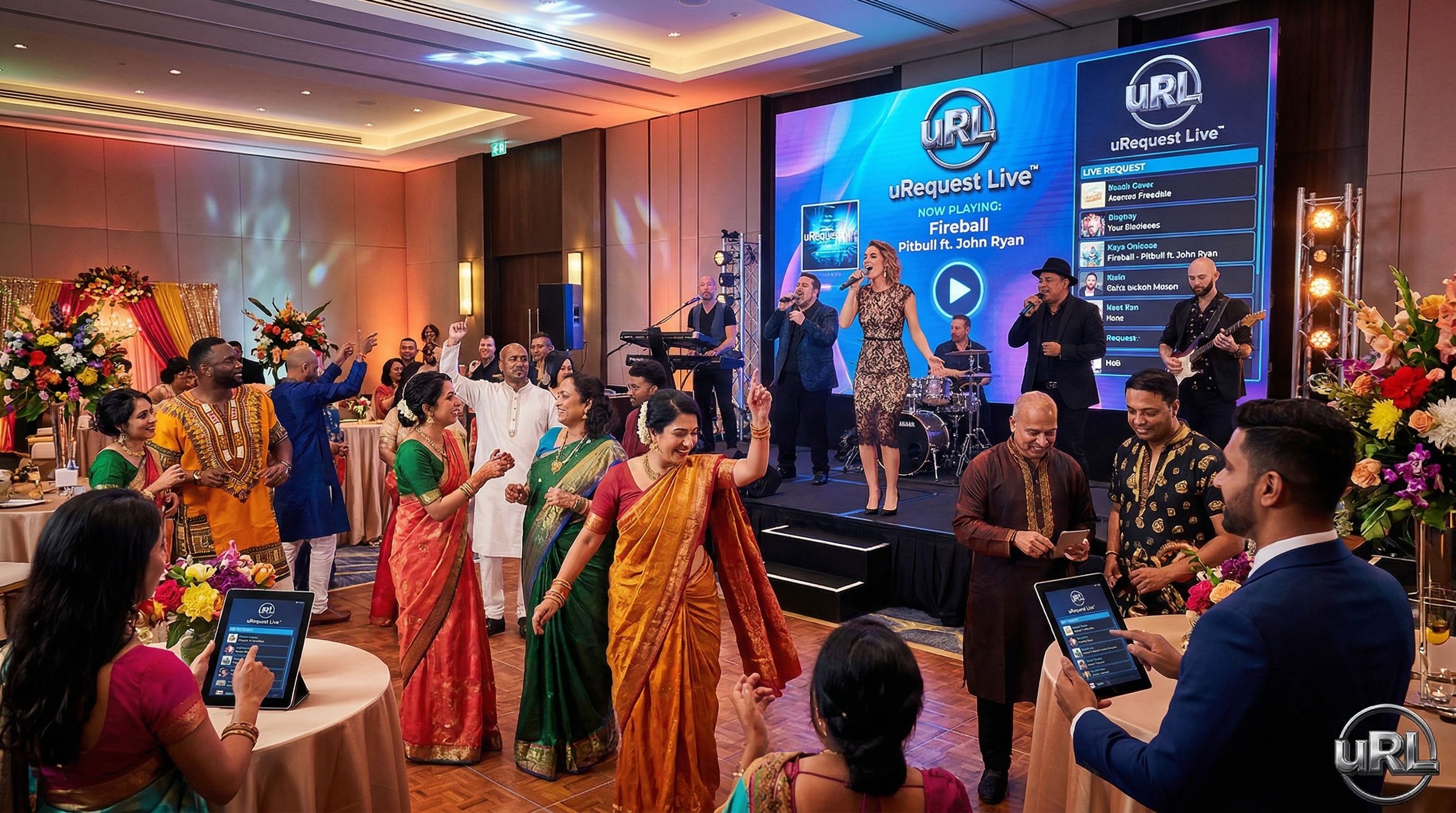
Toronto is one of the most multicultural cities on Earth. Over half of the city's population was born outside of Canada, and that diversity shows up beautifully at weddings. South Asian-European unions, Caribbean-East Asian celebrations, Middle Eastern-Latin American blended families — we've been part of every combination imaginable.
The music at these weddings is both the biggest challenge and the greatest opportunity. Get it right, and you create moments where two families discover they share more in common than they ever imagined. Get it wrong, and one side feels invisible while the other dominates the night.
Here's how to get it right.
Start with Conversations, Not Playlists
Before you choose a single song, sit down with both families — separately at first, then together. Ask each family three questions:
- What songs or types of music are essential to represent your culture at this wedding?
- Are there any musical traditions or moments that are non-negotiable for you?
- What music from the other family's culture are you excited about or curious about?
That third question is gold. It reveals where the bridge-building happens. When the groom's Italian mother says she's curious about the bride's Nigerian drumming traditions, you've found a moment the whole room will share.
Integration vs. Separation
The biggest mistake at multicultural weddings is the "segregated set list" — playing an hour of one culture's music, then an hour of the other's. This creates an invisible wall where each family mentally checks out during the other's segment.
The better approach is integration. Weave songs from both traditions throughout the night. A Bollywood dance hit followed by a Drake banger followed by a Greek classic followed by a Top 40 pop song. Each family hears their music regularly, nobody waits too long, and the transitions create exciting energy shifts.
Song request technology handles this organically. When both families vote on songs from their phones, the resulting mix naturally represents both cultures in proportion to the crowd's enthusiasm. It's democratic music programming.
Cultural Music Moments to Consider
South Asian Traditions
- Baraat entrance: Dhol drums, high energy, processional. The groom's arrival with dancing is a non-negotiable for many families.
- Sangeet dances: Pre-planned performances by family members. Coordinate timing with the band.
- Bollywood dance set: Classic and contemporary Bollywood songs get every South Asian guest on the floor instantly.
Jewish Traditions
- The Hora: "Hava Nagila" with chair lifting is one of the most joyful moments at any wedding. Every guest — regardless of background — wants to participate.
- Klezmer music: Traditional klezmer during cocktails or dinner adds cultural texture.
Greek Traditions
- Circle dances: Kalamatianos and Syrtos bring extended family together in a way that invites everyone to join.
- Plate smashing (symbolic): Time the music to this dramatic tradition for maximum energy.
Caribbean Traditions
- Soca and calypso sets: High-energy, rhythm-driven music that gets anyone moving regardless of background.
- Reggae transitions: Bob Marley songs are universally loved and bridge cultures effortlessly.
Latin Traditions
- Salsa and merengue sets: Even non-dancers try salsa because the rhythm is irresistible.
- "Despacito" effect: Latin-pop crossover hits work as bridge songs between cultural segments.
Choosing the Right Band for a Multicultural Wedding
Not every band can pull off a multicultural wedding convincingly. When evaluating bands, ask specifically:
- What cultural music styles are in your active repertoire?
- Can you play [specific cultural songs] that are important to us?
- Do you have access to guest musicians for specific cultural instruments?
- Can we hear a demo of you playing [specific cultural genre]?
- How do you handle transitions between very different musical styles?
Toronto's best wedding bands are inherently multicultural — they've grown up in this city's musical melting pot and can move between genres with genuine authenticity, not just technical competence.
The Technology Advantage
Here's where song request technology truly shines at multicultural weddings. The platform can be configured with songs from every represented culture. Both families vote throughout the night, and the band plays what the crowd collectively wants.
What happens naturally is beautiful: the Jamaican aunties vote for soca during the high-energy segment, the Korean cousins vote for K-pop hits, the Canadian university friends vote for indie rock, and the grandparents vote for classic standards. The resulting mix is something no wedding planner could have programmed — it's the authentic musical identity of that specific gathering of people.
Planning a Multicultural Celebration?
We specialize in weddings where multiple musical traditions come together. Let's create something beautiful.
Frequently Asked Questions
How do you blend two musical traditions?
Integration over separation. Weave songs from both traditions throughout the night rather than playing them in separate blocks. Song request technology creates natural balance by letting both families vote.
Can a live band play multiple cultural styles?
Versatile Toronto bands handle 3-5 cultural styles confidently. Ask for demos of specific traditions. Some bands bring guest musicians (dhol players, bouzouki, etc.) for authenticity.
How do you handle a do-not-play list?
Create it collaboratively with both families. Be specific about what to avoid and why. Song request technology can exclude specific songs from the voteable library.
What if families have different energy preferences?
Program energy levels throughout the evening: lower energy during dinner (honoring conservative preferences), building to high energy during dancing (where enthusiastic traditions thrive).