
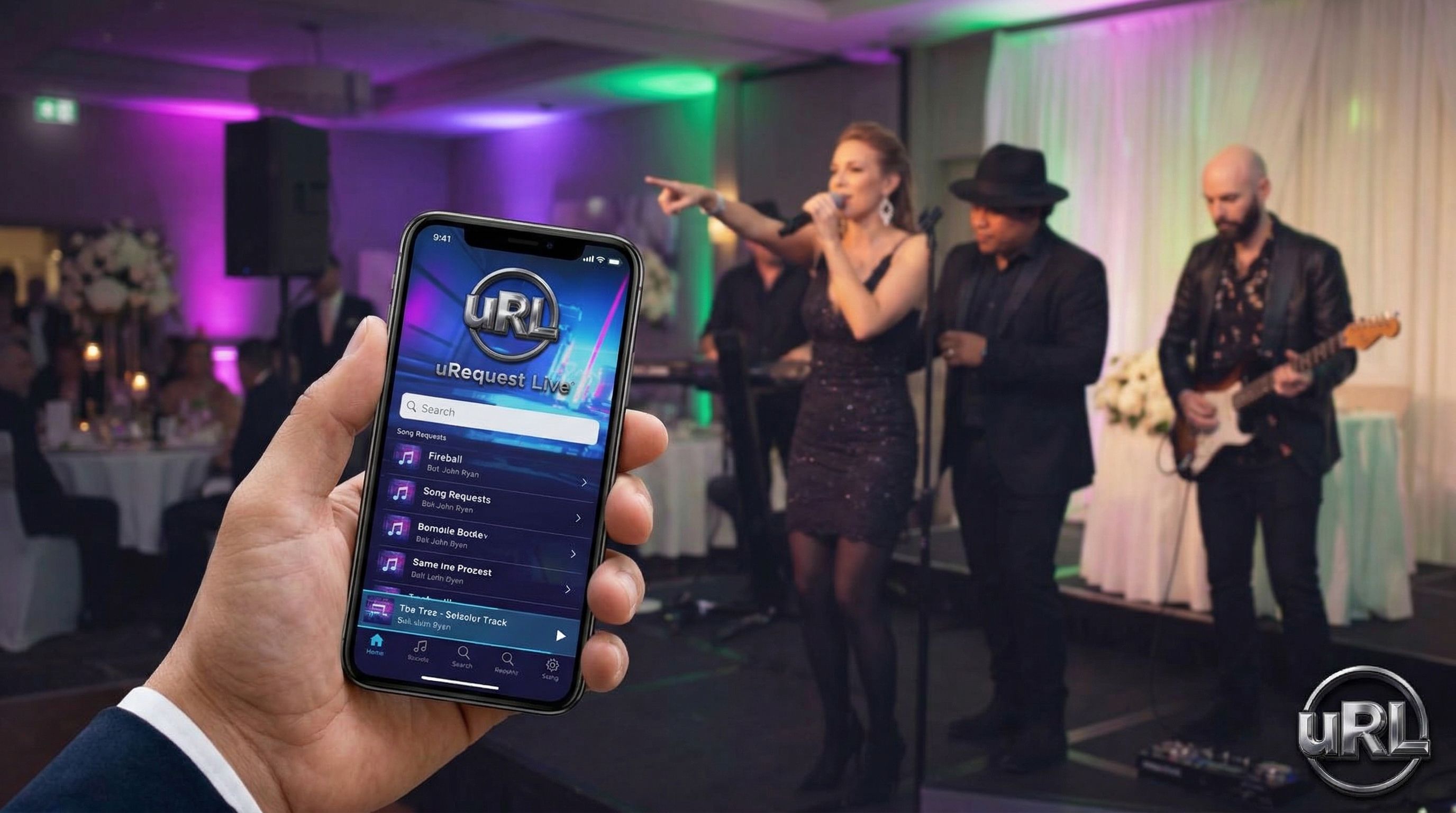
There's a fundamental problem with wedding entertainment that nobody talks about: the person choosing the music is guessing. Whether it's a DJ scanning the room or a band leader following a set list, they're making educated guesses about what 150+ diverse humans want to hear at any given moment.
Sometimes they guess right. Often they don't. And when they don't, you get the dreaded half-empty dance floor at 9:30 PM — right when the party should be peaking.
Song request technology eliminates the guessing. Here's why it's become the fastest-growing trend in Toronto wedding entertainment.
How It Actually Works
The concept is simple. The execution is elegant.
- QR codes are placed throughout the venue — on tables, at the bar, on signage. They're designed to complement your wedding aesthetic, not distract from it.
- Guests scan with their phone camera. No app download, no account creation. A mobile-optimized web interface opens instantly in their browser.
- They browse a curated song library. The library is built in advance with the couple and the band — it includes only songs the performers can play and that fit the wedding's vibe.
- They request and vote. Each guest can request songs and upvote others' requests. The most popular choices rise to the top of a live leaderboard.
- The band sees requests in real time on a tablet or monitor on stage. They choose from the top-voted songs, responding to the crowd's collective energy.
- The crowd reacts. When a song they voted for gets played, the emotional payoff is real. People cheer, rush the dance floor, and feel personally connected to the music.
The whole interaction takes 15-30 seconds per guest. It's frictionless, intuitive, and addictive — in a good way. We see guests returning to the platform 8-12 times throughout a typical reception.
Why Couples Love It
It Eliminates Music Anxiety
One of the biggest stressors for couples is creating the "perfect playlist." Will guests like the songs? Will the dance floor be empty? With song request technology, the crowd self-selects. The music is always right because the audience chose it.
It Handles Multi-Generational Crowds
A typical Toronto wedding includes grandparents, parents, peers, and sometimes children. Each group has different musical preferences. Rather than the band guessing who to please when, the voting system reveals what the specific crowd composition wants at that moment. It's real-time demographic analysis that happens automatically.
It Creates Talking Points
"Did you vote for that song?" "I can't believe your grandmother requested Drake!" The technology gives guests something to interact about beyond small talk. It becomes a shared activity that bridges tables, age groups, and social circles.
It Produces Lasting Data
After the wedding, couples receive a report showing which songs were most requested, which got people dancing, and which demographics engaged most. It's a digital time capsule of your celebration's musical DNA. Some couples use this data for anniversary playlists or party planning for years to come.
The Couple Stays in Control
The biggest concern couples have: "What if guests request terrible songs?" Here's how the system prevents that:
- Curated library: Only pre-approved songs appear. If it's not in the library, it can't be requested.
- Do-not-play list: Specific songs or entire genres can be excluded.
- Locked songs: Must-play songs (first dance, parent dances, etc.) are locked into the timeline regardless of votes.
- Band discretion: The performers always have final say. If a song doesn't fit the energy of the moment, they skip it.
- Genre guardrails: You can weight the library toward preferred genres while still offering variety.
Think of it as curated democracy. The crowd has a voice, but the couple and the band set the boundaries.
Real Results from Toronto Weddings
The Numbers Speak
- 85% of guests interact with the platform at least once
- 78% average dance floor participation (vs. 45% without technology)
- 2.1 hours average time guests spend dancing (vs. 1.2 hours traditional)
- 96% of couples rate the experience as "exceeded expectations"
- 3.2x more social media posts from guests compared to non-interactive weddings
These aren't theoretical projections. They're measured outcomes from real Toronto weddings across venues from Liberty Grand to The Distillery District to private estate celebrations.
How to Get Started
If you're intrigued by song request technology for your wedding, here's the path forward:
- Choose your entertainment first. The technology works best when integrated with a live band or DJ who knows how to use the data. Book your entertainment provider, then discuss technology options.
- Build your song library together. Work with your band to create a list of 200-500+ songs across genres, decades, and cultures that reflect your guest list.
- Set your boundaries. Define must-play songs, do-not-play songs, genre preferences, and timing constraints.
- Design the QR experience. The platform interface and QR code designs should match your wedding aesthetic. Most providers offer customization options.
- Brief your wedding party. Ask your wedding party to be early adopters at the reception — their enthusiasm gets other guests participating.
See Song Request Technology in Action
We'll walk you through a live demo and show you exactly how it transforms a wedding reception.
Frequently Asked Questions
What is song request technology?
A platform where guests use their phones to browse songs, request favorites, and vote. The band sees top requests in real time. Accessed via QR code — no app download needed.
Can couples still control the music?
Absolutely. Couples curate the library, set do-not-play lists, lock must-play songs, and define genre mix. Guest voting happens within those guardrails.
Does it replace a band or DJ?
No — it enhances them. The technology gives performers data about crowd preferences, replacing guesswork with actual demand signals.
What about inappropriate requests?
Only pre-approved songs appear in the library. The band has final discretion. Between curation and performer judgment, inappropriate requests are filtered before reaching speakers.
How much does it cost?
Bundled with live entertainment: 15-25% premium. Standalone: $300-$800. ROI is significant — 30-40% higher dance floor participation compared to traditional entertainment.