
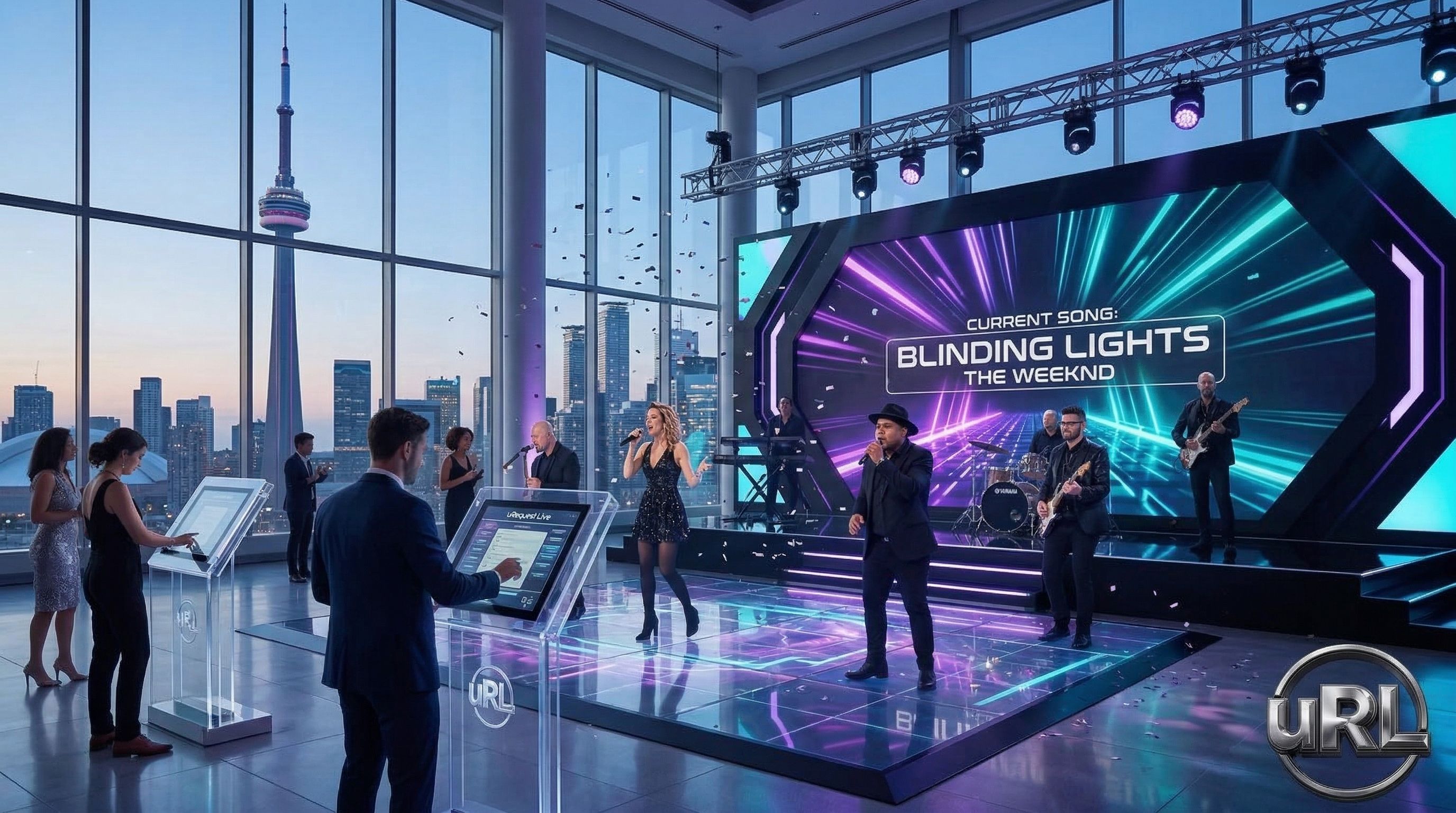
Every year, the wedding entertainment landscape shifts. Some trends are genuine evolutions driven by changing couple expectations and technology advances. Others are marketing noise that fades by next season. After booking entertainment across the GTA for years, here's our honest assessment of what's actually trending in Toronto weddings for 2026 — backed by real booking data and first-hand observation.
Trend #1: Interactive Entertainment Becomes the Default
This isn't emerging anymore — it's arrived. Song request technology and live band karaoke have moved from "innovative option" to "expected feature" for Toronto weddings. Couples who grew up with Spotify, social media, and interactive digital experiences expect the same level of participation at their wedding.
The data backs this up. Our interactive entertainment bookings are up significantly year-over-year. The conversation has shifted from "do we want interactive entertainment?" to "what type of interactive entertainment?" Couples now comparison-shop technology platforms the way they used to comparison-shop band rosters.
What's driving this: post-pandemic emphasis on shared experiences, social media culture that rewards participation, and measurable evidence that interactive entertainment produces better outcomes. When you can show couples data proving 78% dance floor participation versus 45%, the decision makes itself.
Trend #2: The Genre-Blending Set List
The traditional wedding set list — classic rock, Motown, Top 40, done — is giving way to genre-fluid programming. Toronto's multicultural identity demands it. A typical 2026 Toronto wedding set might flow from Afrobeats to indie rock to Bollywood to classic soul to Latin pop within a single 30-minute block.
This requires musicians who are genuinely versatile, not just bands that "can play a few different styles." The demand for multi-genre fluency has raised the bar for wedding bands across the city. Bands that can authentically move between five or six genres are booking out faster than ever.
Genre Watch: What's Hot
- Afrobeats and Amapiano: Driven by Toronto's large African diaspora community, these rhythms have crossed into mainstream wedding playlists. Wizkid, Burna Boy, and Tems tracks are requested at weddings across all demographics.
- K-Pop crossovers: BTS and BLACKPINK have moved from niche requests to regular dance floor appearances, especially at weddings with younger guest demographics.
- Neo-soul and R&B: Daniel Caesar (Toronto's own), SZA, and Frank Ocean represent a shift toward sophisticated, emotional music that works for both dinner and dancing.
- Latin rhythms: Bad Bunny's influence continues. Reggaeton and Latin pop are standard dance floor fare regardless of the crowd's cultural background.
- Vintage soul revival: Classic Motown and '60s soul are experiencing a renaissance, driven by younger couples discovering these songs through social media and vinyl culture.
Trend #3: The Live Instrument Renaissance
After a decade where electronic production dominated pop music, there's a swing back toward live instruments at weddings. Couples want the raw energy of real horns, the warmth of an acoustic guitar, the groove of a live drummer. Synthesized sounds feel impersonal; live instruments feel human.
We're seeing more requests for horn sections (saxophone, trumpet) than any time in the last ten years. Bands with brass sections are commanding premium rates. Acoustic ceremony sets with unique instrumentation (cello, violin, even harp) are trending for couples who want organic, unprocessed musical moments.
This isn't nostalgia — it's a reaction to the hyper-digital world these couples live in. Their wedding is the one day they want everything to feel real, tangible, and analog.
Trend #4: Micro-Entertainment Moments
Rather than one long block of entertainment, 2026 couples are programming multiple distinct entertainment moments throughout their wedding:
- Ceremony: String duo with a surprise vocal performance during the signing
- Cocktail hour: Solo jazz guitarist with ambient electronics
- Dinner: Acoustic trio with subtle background vocals
- Dessert: Surprise musical moment (maybe a guest sings, or the band does an acoustic love song)
- Dance party: Full band with interactive technology and karaoke
- Late night: DJ set or acoustic wind-down for the final hour
Each moment has a different musical texture, energy level, and purpose. The overall effect is a reception that feels like it was produced, not just performed at. Couples are thinking like event designers, not just playlist creators.
Trend #5: Data-Informed Music Programming
The most sophisticated trend of 2026: using real data to program wedding music. Song request platforms generate detailed engagement analytics — which songs get the most votes, which demographics are most active, what time of night engagement peaks.
Forward-thinking couples are using this data in creative ways:
- Pre-wedding surveys asking guests about music preferences to pre-build the request library
- Real-time energy tracking during the reception to optimize song sequencing
- Post-wedding analytics as a keepsake showing the "musical DNA" of their celebration
This is the intersection of technology and artistry that defines where wedding entertainment is headed.
What's Fading
Every trends piece should also be honest about what's declining:
- Cookie-cutter set lists: The same 20 songs at every wedding. Couples want personalization, and technology enables it.
- Passive entertainment: "Sit and watch the band" is losing ground to "be part of the show." Spectators are becoming participants.
- DJ-only with light shows: The overproduced DJ experience — massive lighting rigs, fog machines, laser shows — feels more "nightclub" than "wedding" to 2026 couples. Clean, elegant productions are preferred.
- Formal entertainment segments: Rigidly structured "now we do the bouquet toss, now we do the garter" moments feel forced to modern couples. Entertainment is becoming more organic and less scripted.
- Music as background: Couples are investing in music as a central experience, not an afterthought. The "just play something in the background" mentality is declining.
What It Means for Your 2026 Wedding
If you're planning a Toronto wedding in 2026, here's the practical takeaway:
- Prioritize versatility in your entertainment. Bands that can move between genres fluidly will serve your multi-generational, multicultural guest list best.
- Budget for interactivity. Song request technology, live karaoke, or participatory elements aren't extras — they're becoming the standard.
- Think in moments, not in blocks. Design distinct entertainment experiences for each phase of your wedding.
- Value authenticity. Live instruments, genuine vocal performances, and unpolished-but-real moments resonate more than overproduced perfection.
- Let your guests participate. The most memorable 2026 weddings will be the ones where guests helped create the experience.
Ready to Plan a 2026 Wedding That Sets the Trend?
Let's create an entertainment experience that your guests will still be talking about in 2027.
Frequently Asked Questions
What is the biggest wedding music trend for 2026?
Interactive entertainment — song request technology, live band karaoke, and participatory experiences. It's moved from novelty to expectation for Toronto couples.
Are live bands more popular than DJs?
Live bands have seen a significant resurgence with bookings up roughly 30%. The trend is toward hybrid entertainment — bands with DJ elements and technology integration.
What genres are trending?
Genre-blending is the trend. Afrobeats, K-pop, neo-soul, Latin rhythms, and vintage soul revival all feature prominently. Bands that move fluidly across styles are in highest demand.
What trends are fading?
Cookie-cutter set lists, passive entertainment, overproduced DJ light shows, rigidly scripted reception segments, and treating music as background rather than a central experience.