
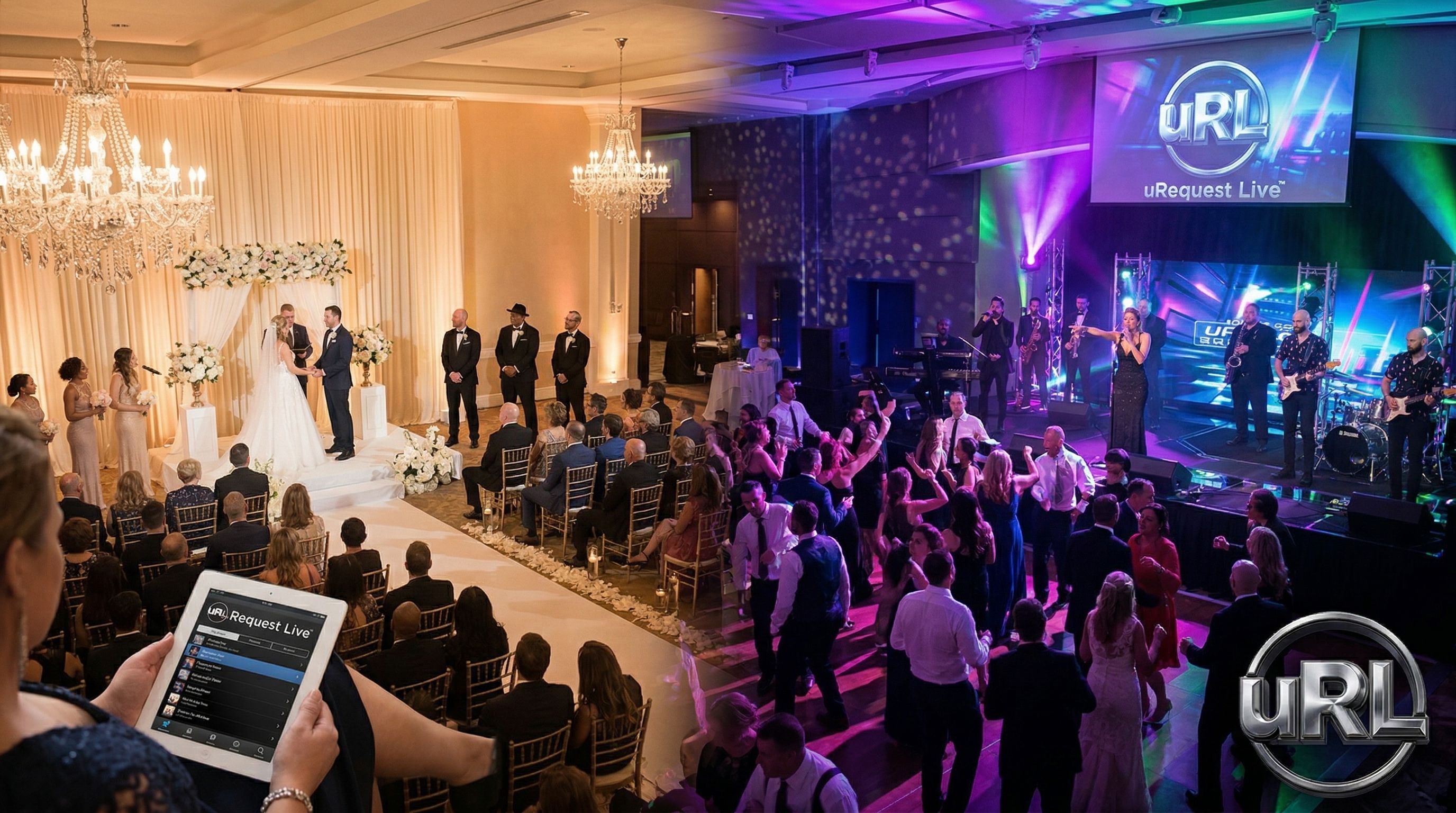
Music isn't just a background element at your wedding — it's the invisible hand guiding the entire emotional arc of the day. The right song at the wrong moment falls flat. The wrong volume during dinner ruins conversations. A gap in music during a transition kills momentum.
This is the timeline we've refined over hundreds of Toronto weddings. It's not rigid — every wedding is unique — but it gives you a framework that professional wedding entertainers use to keep the energy flowing from your first processional note to the last dance.
Pre-Ceremony: Setting the Emotional Stage (30-45 min before)
Guests are arriving, finding their seats, greeting each other. The music here needs to be welcoming without being distracting. Think of it as the opening credits of a film — setting the tone for what's to come.
What Works
- Acoustic instrumental music — guitar, piano, string quartet
- Soft jazz standards or classical pieces
- Volume level: conversational background (60-65 dB)
Song Ideas
- "Canon in D" — Pachelbel (the classic for a reason)
- "A Thousand Years" — Christina Perri (instrumental version)
- "Clair de Lune" — Debussy (elegant, timeless)
- "The Book of Love" — Peter Gabriel (acoustic cover)
Pro Tip: If your ceremony and reception are at the same venue (common at places like The Distillery District or Evergreen Brick Works), coordinate with your band about setup logistics. They may need to transition equipment between spaces.
The Ceremony: Processional, Interlude, Recessional (20-30 min)
Processional (Wedding Party Entrance)
This is when the wedding party walks down the aisle. The music should be beautiful but not steal attention from the visual moment. Classic instrumental choices work best.
- "Canon in D" — Pachelbel
- "Somewhere Over the Rainbow" — IZ (instrumental)
- "At Last" — Etta James (instrumental)
Bridal Entrance
The moment everyone is waiting for. The music should shift noticeably — a key change, a different instrument, or a more emotional piece. This signals to guests that something special is happening.
- "Here Comes the Sun" — The Beatles (acoustic)
- "A Thousand Years" — Christina Perri
- "Can't Help Falling in Love" — Elvis (instrumental)
Signing / Interlude
During the signing of the registry (or sand ceremony, unity candle, etc.), a meaningful song fills the space. This is a great spot for a vocal performance — a friend singing or the band's vocalist performing a special request.
Recessional (The Exit)
You're married! The recessional should be joyful, celebratory, up-tempo. This is your first moment as a married couple — make it feel like a victory lap.
- "Signed, Sealed, Delivered" — Stevie Wonder
- "You Make My Dreams" — Hall & Oates
- "Happy" — Pharrell Williams
- "Lovely Day" — Bill Withers
Cocktail Hour (45-75 min)
Guests are mingling, enjoying drinks and appetizers, and catching up with people they haven't seen in years. The music needs to create atmosphere without overwhelming conversation.
The Formula
- Volume: 65-70 dB — audible but never louder than conversation
- Tempo: Medium, relaxed groove
- Style: Jazz standards, bossa nova, acoustic covers, soul
- Energy: Warm and inviting, building slowly
A 2-3 piece acoustic combo is perfect for cocktail hour — guitar and vocals, piano trio, or a jazz ensemble. If your main band handles cocktail hour too, ask about their acoustic cocktail set — many bands offer a stripped-down format for this portion.
Pro Tip: Cocktail hour often runs over. Build a 90-minute music plan even if you're targeting 60 minutes. You never want the music to stop because the caterer is running behind.
Reception Entrance and Welcome (10-15 min)
The energy shifts dramatically here. The wedding party enters, the couple makes their grand entrance, and the party officially begins.
Wedding Party Introduction
Fun, upbeat tracks as each member of the wedding party is announced. This is where personality shines — bridesmaids might enter to Destiny's Child, groomsmen to "Eye of the Tiger," parents to something classic.
Couple's Grand Entrance
This needs to be a MOMENT. The energy should peak — the band goes full volume, the crowd stands and cheers, and you walk in as a married couple for the first time.
- "Crazy in Love" — Beyonce (that horn riff is an instant energy spike)
- "I Gotta Feeling" — Black Eyed Peas
- "Ain't No Mountain High Enough" — Marvin Gaye
- "Best Day of My Life" — American Authors
First Dance and Special Dances (15-25 min)
The first dance is the most photographed musical moment of your wedding. Choose something that means something to you as a couple, but also consider danceability — you'll be on a floor in front of everyone.
Timing Options
- Right after entrance: Capitalizes on the crowd's energy, gets the emotional moment done while everyone is standing and attentive
- After first course: Gives you time to settle in, guests have a drink in hand, more relaxed atmosphere
- Before opening the dance floor: Builds anticipation, flows directly into the party
Parent Dances
Father-daughter and mother-son dances typically follow the first dance. Keep them to one song each (or half a song) to maintain momentum. Some couples do these simultaneously to save time.
For unique first dance arrangements with a live band, see our guide to creative first dance ideas.
Dinner Service (60-90 min)
This is where most bands make or break the evening. Dinner music needs to enhance the atmosphere without competing with conversation, speeches, or the clinking of glasses.
The Rules
- Volume drops significantly — 60-68 dB maximum
- No songs with strong bass drops or sudden volume changes
- Smooth transitions between songs (no silence between tracks)
- Vocal songs are fine but instrumental passages should dominate
Speeches and Toasts
When speeches begin, the music stops completely. The band or DJ should have a clear cue system with your MC or planner. After each speech, a brief musical moment (a few bars of something appropriate) resets the energy before the next speaker.
Pro Tip for Toronto venues: At venues like Palais Royale and Liberty Grand, the acoustics during dinner can be challenging with large guest counts. Experienced bands know to position speakers for even coverage without creating hot spots near the head table.
Opening the Dance Floor (The Critical Transition)
This is the moment that defines the rest of your night. Get it right, and the dance floor stays packed until closing. Get it wrong, and you spend the evening watching empty floor space.
The Three-Song Ramp
- Song 1 — The Invitation: Upbeat but not overwhelming. Something everyone knows with a strong groove. "Signed, Sealed, Delivered" or "I Wanna Dance with Somebody." This gets the first brave souls onto the floor.
- Song 2 — The Builder: Slightly higher energy. "Uptown Funk" or "September." The early dancers pull friends from their seats. Critical mass starts forming.
- Song 3 — The Lock-In: Peak energy. "Don't Stop Believin'" or "Livin' on a Prayer." By this song, the floor should be full and self-sustaining.
This is also the perfect time to activate song request technology. Once guests see their votes influencing the music, engagement skyrockets.
Peak Dance Party (90-120 min)
This is why you hired a band. The dance floor is open, the energy is high, and the music drives the celebration. A great band manages this period in waves — high energy, brief cool-down, then back to peak intensity.
Energy Wave Pattern
- 3-4 high-energy songs (build, build, build)
- 1 medium-energy song (brief breather, people grab drinks)
- 3-4 high-energy songs (recommit to the floor)
- Optional: live band karaoke segment (maximum crowd engagement)
- Repeat the wave pattern, increasing peak intensity each cycle
This is also when special moments happen organically — the hora, a spontaneous group sing-along, the moment someone's grandmother tears up the dance floor. Let the band read the room and respond.
The Last Dance and Send-Off (5-10 min)
The last song is the final musical memory guests take home. Choose something that feels like a celebration of the entire night — not a wind-down, but a final burst of joy.
- "Don't Stop Believin'" — Journey (if you haven't used it yet)
- "I've Had the Time of My Life" — Bill Medley & Jennifer Warnes
- "September" — Earth, Wind & Fire
- "We Are the Champions" — Queen
Some couples do a sparkler exit or a send-off with a final song. Coordinate this with your photographer and planner — the timing of the music should match the visual moment perfectly.
Let's Plan Your Perfect Wedding Music Timeline
Every wedding is different. We'll work with your planner to create a custom timeline that fits your vision.
Frequently Asked Questions
How long should music play at a wedding reception?
A typical reception runs 4-5 hours: 1 hour cocktails, 1-1.5 hours dinner, and 2-2.5 hours dancing. Book at least 4 hours plus overtime options.
What time should the first dance happen?
Usually 30-45 minutes into the reception, right after the couple's entrance. Some couples do it later, before opening the dance floor, to build anticipation.
When should the band take breaks?
During natural pauses: meal transitions, between speeches, or dessert service. Two 15-minute breaks per 4-hour set. Pre-recorded music fills gaps seamlessly.
What time does the dance floor open?
For 6 PM receptions, dancing typically starts 8:30-9:00 PM after dinner and speeches. The key is allowing formalities without making guests wait too long.