
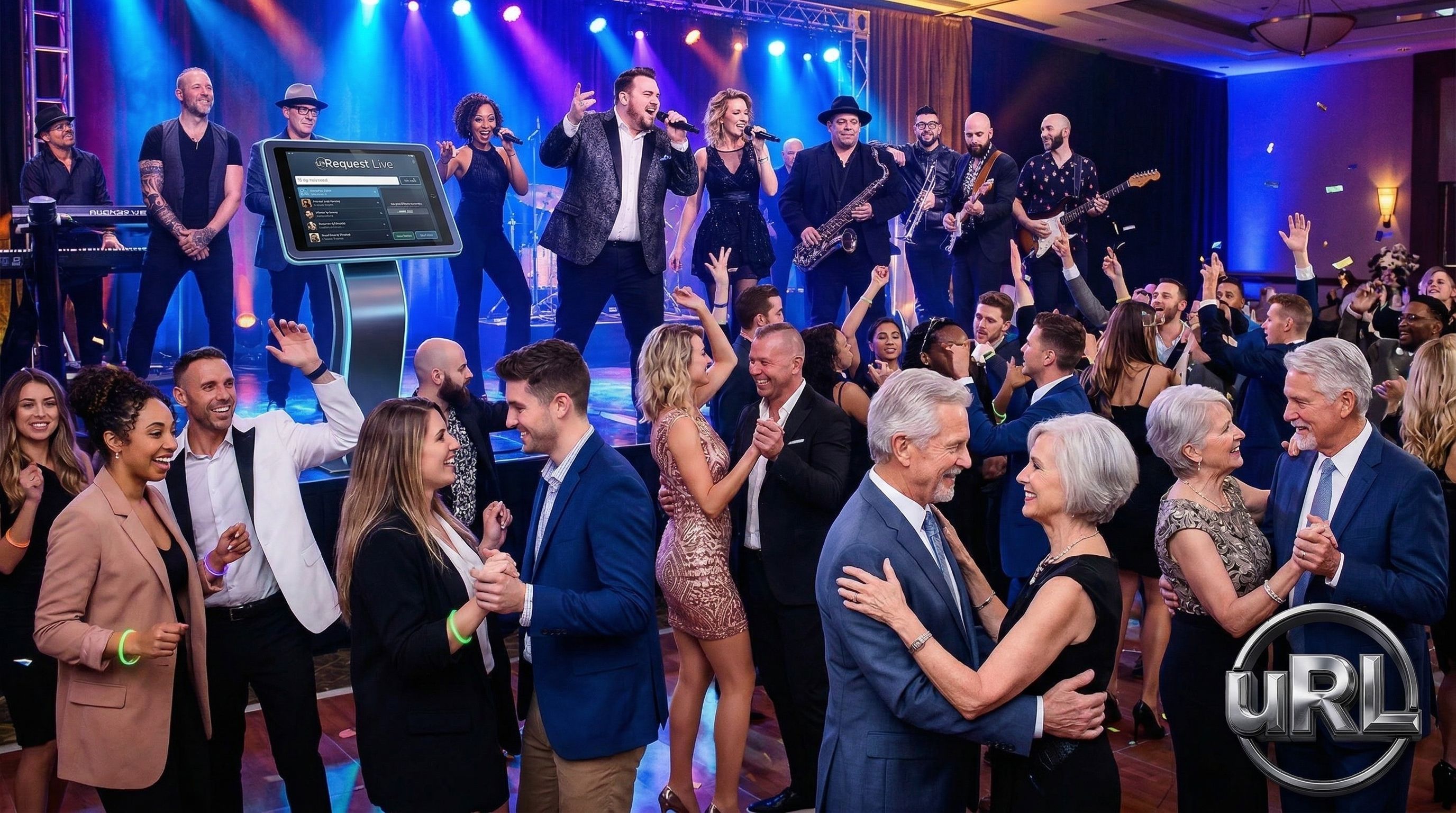
A typical corporate event in 2026 has four generations in the room. The 23-year-old analyst who grew up on Olivia Rodrigo and TikTok. The 35-year-old manager who came of age with Kanye and Beyonce. The 50-year-old VP who still knows every word to "Livin' on a Prayer." The 62-year-old executive who saw The Rolling Stones live in the '80s.
Play only current hits, and you lose the senior leadership. Play only classic rock, and the new hires check out. Play a random shuffle of everything, and you create a disjointed experience that satisfies nobody fully.
There's a better approach.
Understanding Each Generation's Musical Identity
Before you can bridge generations, you need to understand what each one responds to.
Boomers (1946-1964): The Classic Rock Foundation
This generation's musical identity was forged in the golden age of rock and Motown. Beatles, Stones, Aretha Franklin, Stevie Wonder. But here's the insight most planners miss: Boomers aren't stuck in the '60s and '70s. Many are fans of contemporary artists. They just want to hear the songs they know — and they know songs from every decade because they've lived through them all.
Gen X (1965-1980): The Bridge Generation
Gen X is your secret weapon. They grew up on MTV, experienced the dawn of hip-hop, and adapted to every musical evolution since. They're comfortable with 80s synth-pop, 90s grunge, early 2000s pop, and modern hits. Play "Sweet Child O' Mine" and they light up. Play "Blinding Lights" and they're still dancing.
Millennials (1981-1996): The Nostalgia Seekers
Millennials crave 2000s nostalgia. Usher, Destiny's Child, Outkast, early Kanye. But they're also the generation that made festivals mainstream, so they respond to high-energy production and participatory formats. Millennials are also the most likely to use song request technology — they request at 2.3x the rate of other demographics.
Gen Z (1997-2012): The Viral Generation
Gen Z's relationship with music is shaped by TikTok and streaming algorithms. They know songs from every era — but they know them through viral moments, not chronological exposure. A Gen Z employee might know "Dreams" by Fleetwood Mac (2020 TikTok) better than "Don't Stop" from the same album.
The Great Equalizer: Song request technology solves the multi-generational problem by giving every person a vote. Instead of the bandleader guessing what the room wants, the room tells them directly. The result is a setlist that organically represents the actual demographic mix.
The Cross-Generational Playlist Strategy
After analyzing request data across multi-generational events, we've identified three categories of songs that work.
Category 1: Universal Anthems
Songs that transcend their era. "September" by Earth, Wind & Fire gets every generation moving. So does "Bohemian Rhapsody," "Don't Stop Believin'," and "Mr. Brightside." These songs have achieved a cultural permanence that means a 25-year-old and a 60-year-old both know every word.
Category 2: Era Bridges
Songs from one era that found new life in another. "Running Up That Hill" by Kate Bush (1985, but made viral in 2022 by Stranger Things). "Dreams" by Fleetwood Mac (1977, but TikTok viral in 2020). These songs have dual-generation resonance and create moments where a Boomer and a Gen Z employee are singing the same words for completely different reasons.
Category 3: Genre Crossovers
Songs that blend genres in ways that appeal broadly. "Blinding Lights" by The Weeknd (modern production, 80s synth influence). "Uptown Funk" (modern pop, classic funk). "Get Lucky" by Daft Punk (electronic meets disco). These crossover tracks appeal to multiple generations because they carry sonic DNA from different eras.
The Format Question
Choosing the right entertainment format is as important as choosing the right songs.
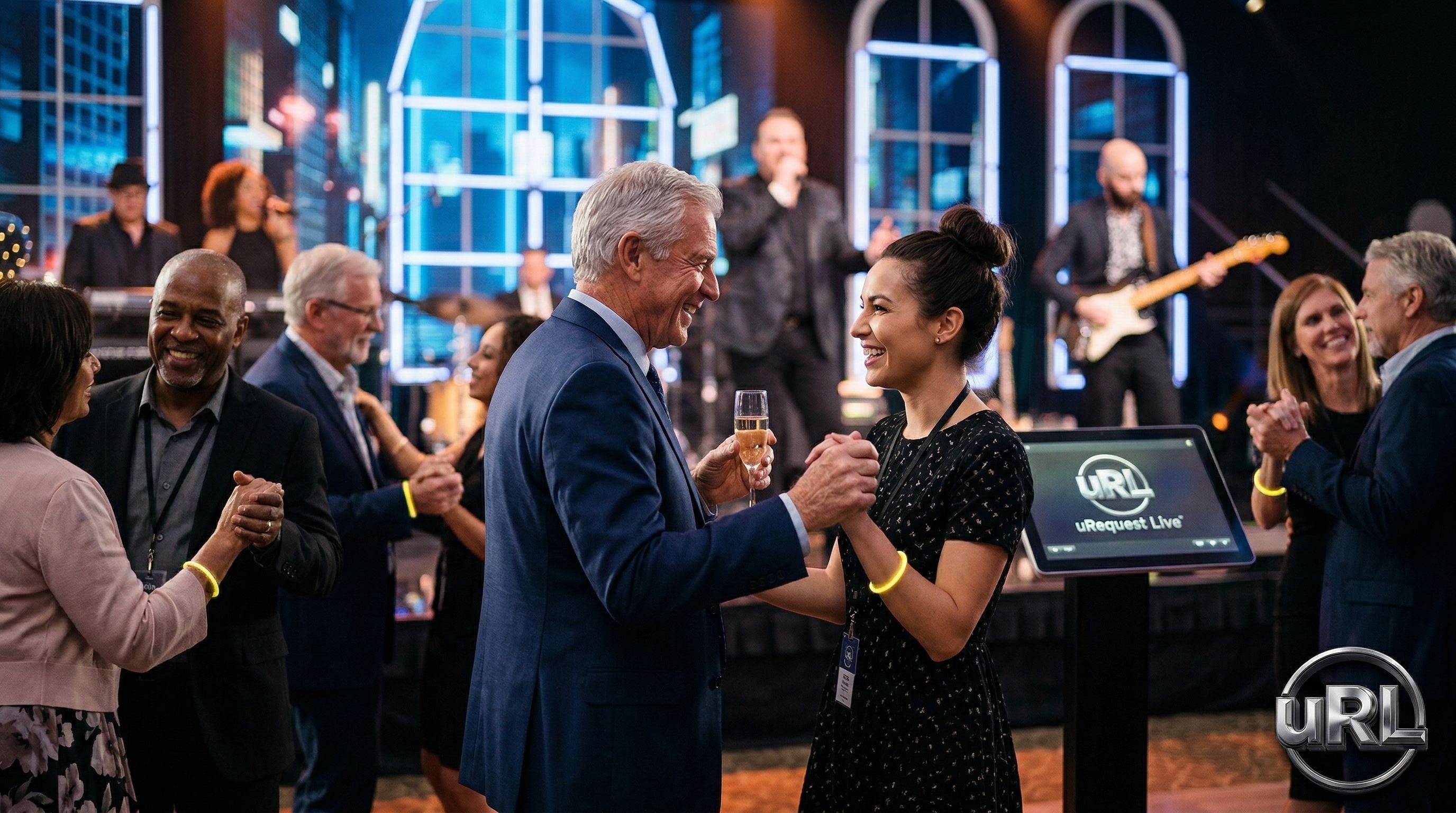
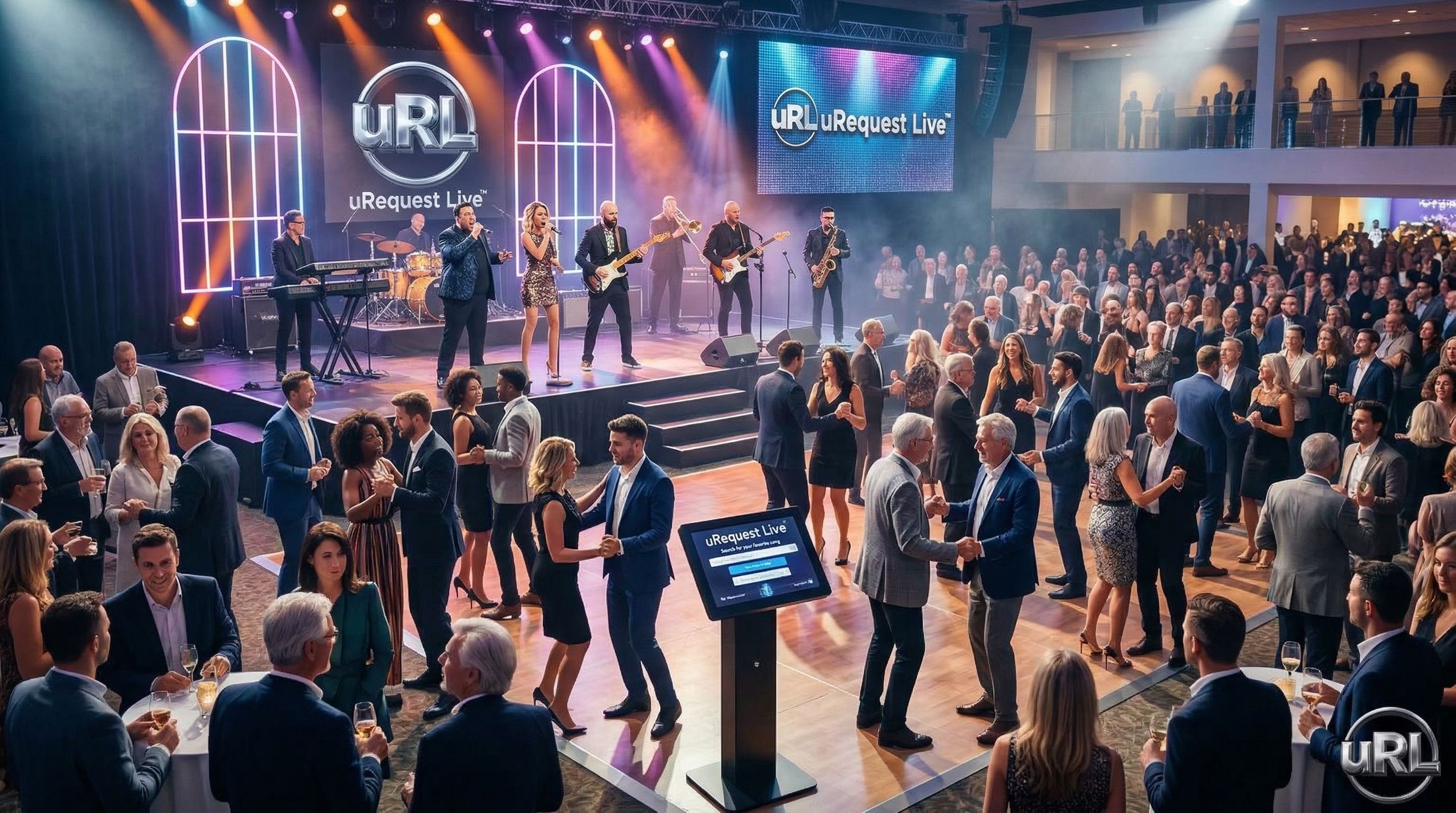
Interactive bands with song request technology are the strongest multi-generational format because they let the audience self-curate. The band doesn't have to guess the demographic mix — the request data reveals it in real time.
Live band karaoke is a powerful multi-generational equalizer. When the VP sings "Sweet Caroline" and the intern sings "Love Story," the hierarchy dissolves. Everyone is equally vulnerable, equally celebrated, and equally part of the show.
The Sequencing Trick
The order matters as much as the selection. Here's the sequencing approach that works at multi-generational events:
Open with universal anthems. Start the dance segment with 3-4 songs that everyone knows. This fills the floor with all ages simultaneously, setting the tone that this is a shared experience.
Alternate eras, not cluster them. Don't play five 80s songs in a row followed by five 2020s songs. Instead, sequence: 80s hit, current hit, Motown classic, 2000s banger. This constant era-hopping keeps every demographic engaged because "their" song is never more than 5 minutes away.
Close with a generational bridge. End the night with a song that connects every person in the room. "Don't Stop Believin'" or "I Gotta Feeling" — songs where 23-year-olds and 62-year-olds are singing arm-in-arm.
That's the real goal of multi-generational entertainment: not just entertaining everyone individually, but creating moments where the entire room is united in a shared musical experience. When that happens, age differences don't just become irrelevant — they become invisible.
Frequently Asked Questions
What music appeals to all age groups at corporate events?
Cross-generational hits that have achieved cultural ubiquity: "September," "Don't Stop Believin'," "Uptown Funk," "Shake It Off." These songs transcend the era they were released in.
How do you keep both younger and older employees engaged?
Use song request technology so each demographic self-selects. Alternate between eras rather than clustering them. Weave current hits between classics to keep every age group engaged.
Should you hire different entertainment for different age groups?
No. The shared experience of diverse music played live is more powerful than segregated entertainment. Choose a versatile band with a massive repertoire spanning 5+ decades.
What genres should you avoid at multi-generational events?
Avoid deep-genre niches: heavy metal, hardcore EDM, obscure indie. Stick to broadly appealing genres: pop, Motown, classic rock, R&B, and current radio hits.
Unite Every Generation
Let us help you choose entertainment that brings your whole team together — regardless of age.
Plan Your EventArthur Kerekes
Head of Client Experience at uRequest Live
Arthur has spent over a decade in live entertainment, working with corporate clients across North America to create unforgettable event experiences. He leads client strategy at uRequest Live, where data-driven song selection meets world-class live performance.
Related Articles
The Psychology of Music at Corporate Events
The science behind why certain music connects across demographics.
Top 10 Songs for Corporate Events in 2026
The cross-generational hits tested at 500+ events.
Corporate Holiday Party Entertainment That Employees Actually Enjoy
Making holiday events work for every age group.