
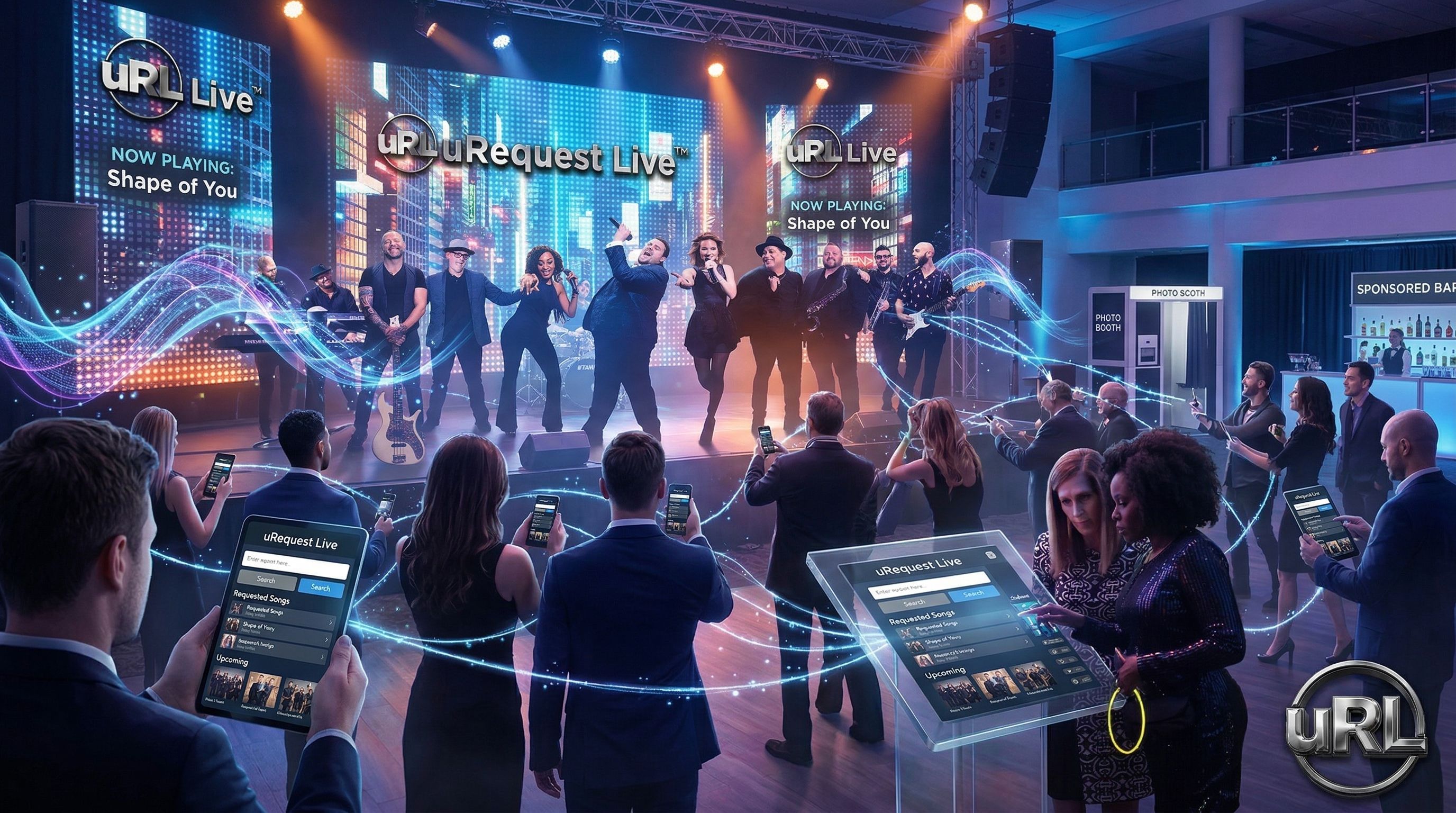
Music at corporate events is never just background noise. Whether you're conscious of it or not, the music playing at your company gala is shaping how people behave, how they feel about each other, and how they'll remember the experience months later.
Understanding the psychology behind music at events isn't academic curiosity. It's a practical toolkit for creating events that actually achieve their goals — whether that's team bonding, client retention, or brand building.
The Dopamine Connection
When you hear a song you love — especially one tied to a strong memory — your brain releases dopamine. The same neurotransmitter triggered by food, sex, and social connection. This isn't metaphorical. Brain imaging studies consistently show that familiar, emotionally resonant music activates the nucleus accumbens, the brain's reward center.
At a corporate event, this has a very practical implication: when a band plays songs that guests have a personal connection to, those guests experience a genuine neurochemical reward. They feel good. And they associate that feeling with the event, the company, and the people around them.
This is why song request technology is so powerful. When someone requests a specific song — their wedding song, their college anthem, the track that defined a particular summer — and hears it performed live, the dopamine response is amplified by the sense of personal agency. They didn't just hear a good song. They made it happen.
Neuroscience Insight: The "chill" response — goosebumps from music — occurs when the brain's prediction of what comes next is both confirmed and slightly exceeded. Familiar songs with live performance variation (improvisation, crowd interaction) maximize this response.
Tempo and Behavior
Music tempo directly influences physiological arousal. This isn't subtle — it's measurable. Heart rate, breathing rate, and motor activity all synchronize to tempo within seconds of exposure.
For event planners, this means you can literally control the energy level of a room through tempo selection:
60-80 BPM: Relaxation zone. Ideal for cocktail reception background music. Heart rates slow, conversation deepens, stress hormones decrease.
80-100 BPM: Transition zone. People start to nod, tap feet, shift posture. Great for the dinner-to-dance bridge.
100-115 BPM: Movement zone. Most people unconsciously start to move. This is where casual dancers join the floor.
115-128 BPM: Peak dance zone. Maximum participation, maximum energy. This is where your biggest crowd-pleasers live.
130+ BPM: High intensity. Works for short bursts but fatigues casual dancers quickly. Use sparingly in corporate settings.
The Familiarity Principle
The mere exposure effect — a well-documented psychological phenomenon — means people prefer things they've encountered before. In music, familiarity breeds comfort, not contempt.
At corporate events, this creates a strategic decision: how much to play what people know versus surprising them with something new.
Our data from hundreds of corporate events suggests the optimal ratio is roughly 75% familiar / 25% discovery. Three-quarters of the setlist should be songs the majority of the room recognizes within the first few bars. The remaining quarter can introduce lesser-known tracks that fit the energy and mood — these become "I heard this amazing song at the company party" moments.
Social Synchrony and Team Bonding
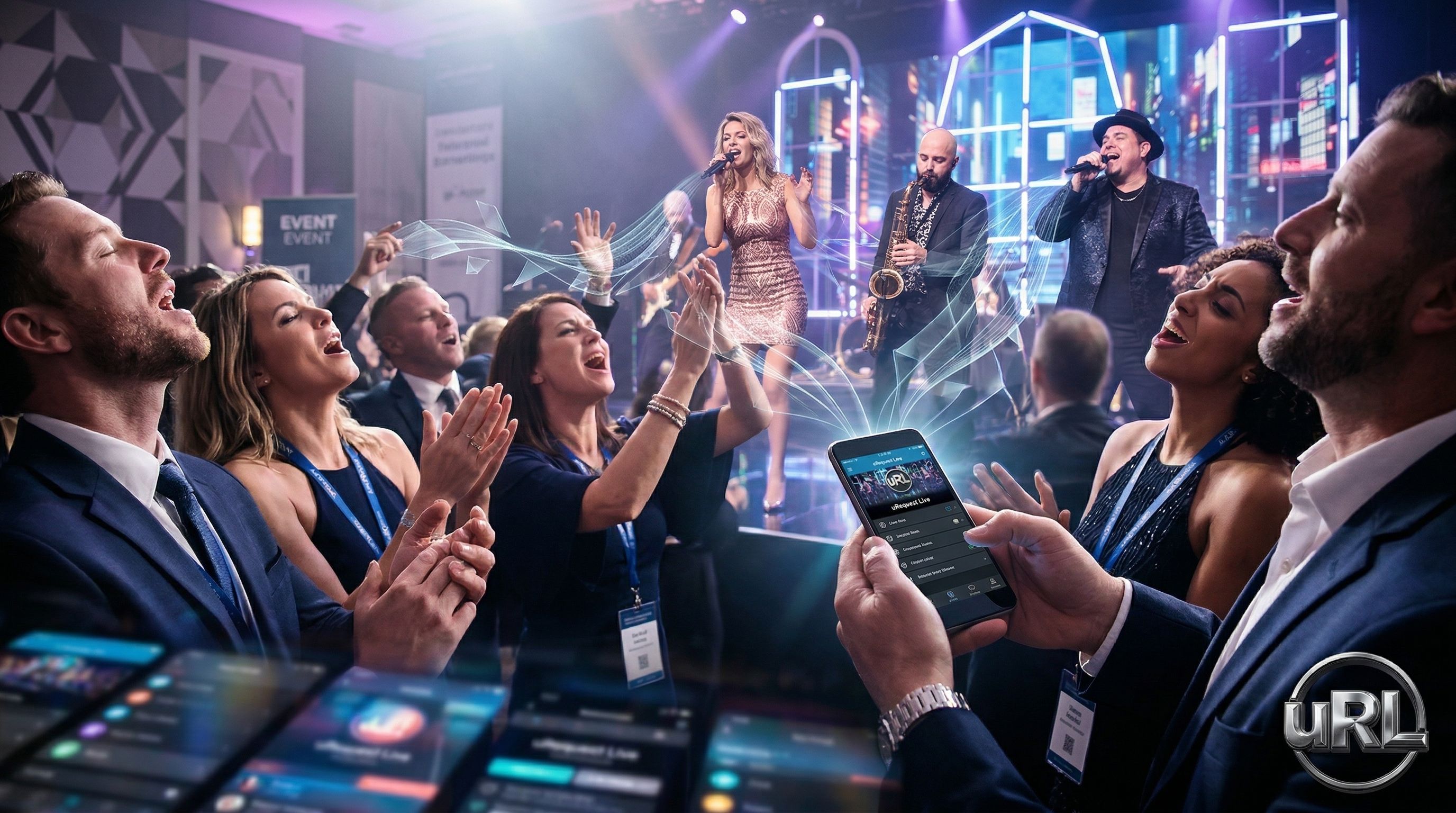
One of the most fascinating findings in music psychology is the concept of social synchrony. When people move to the same rhythm — dancing, clapping, singing together — their brains literally synchronize. EEG studies show increased neural coupling between individuals who are musically synchronized.
The practical effect: people who dance together, sing together, or even just clap together report feeling more connected, more trusting, and more cooperative. This is the neurological basis for why music-driven team events build stronger teams than PowerPoint-driven offsites.
For corporate events, this means the dance floor isn't just fun — it's a bonding mechanism that operates at the neurological level. Two colleagues who've never spoken but danced together for an hour will have a fundamentally different working relationship than two colleagues who exchanged business cards at a networking event.
The Memory Encoding Advantage of Live Music
Memory formation is strongest when multiple sensory channels are engaged simultaneously. This is called multi-sensory encoding, and it's why live music creates more durable memories than recorded music.
At a live performance, you're processing:
Auditory: The music itself, plus the unique acoustic characteristics of the room.
Visual: The band's performance, the lighting, the crowd's reaction.
Physical: Bass vibrations through the floor, the kinesthetic experience of dancing.
Social: Eye contact with friends, shared singing, collective cheering.
Emotional: The peaks of energy, the moments of surprise, the personal significance of requested songs.
Each of these channels creates its own memory trace. When they fire together, the resulting memory is richer, more detailed, and more resistant to fading. This is why people remember great live music events for years — and barely recall what songs played at a background-music event last month.
Applying the Science to Your Next Event
Understanding the psychology doesn't require a neuroscience degree. Here are the practical takeaways:
Map your tempo curve. Start low (cocktails), build gradually (dinner transition), peak (dance party), and bring it back down (closing). This follows the natural arc of physiological arousal.
Maximize familiarity. Choose entertainment that plays songs your audience knows. Use request technology to let the audience tell you exactly which songs resonate.
Create participation moments. Singing along, clapping, and live karaoke create social synchrony that strengthens bonds. The more people participate, the stronger the memory and the deeper the connection.
Invest in live performance. The multi-sensory richness of live music creates memories that recorded music cannot match. For events where lasting impression matters, live is non-negotiable.
Frequently Asked Questions
How does music affect behavior at corporate events?
Music directly influences movement, social interaction, and emotional state. Upbeat tempos increase physical activity and social openness. Familiar songs trigger dopamine release. Live music creates shared emotional experiences that strengthen social bonds.
What tempo is best for corporate event dance floors?
The sweet spot is 115-120 BPM — energetic enough to move to, comfortable enough to sustain. Below 100 BPM, most people sway rather than dance. Above 135 BPM, casual dancers tire quickly.
Why does live music create stronger memories than recorded music?
Live music engages more senses simultaneously — visual, physical, social, and emotional — creating stronger neural encoding. The shared experience also triggers mirror neuron activity, creating collective emotion that recorded music cannot replicate.
How does music choice affect networking at corporate events?
Background music at 65-72 dB reduces social anxiety and fills awkward silences. Familiar songs create conversation starters. Interactive elements like song requests give strangers a shared activity, reducing the friction of cold networking.
Design Your Event Around the Science
Let us help you create an event experience backed by behavioral science and audience data.
Plan a Science-Backed EventArthur Kerekes
Head of Client Experience at uRequest Live
Arthur has spent over a decade in live entertainment, working with corporate clients across North America to create unforgettable event experiences. He leads client strategy at uRequest Live, where data-driven song selection meets world-class live performance.
Related Articles
Top 10 Songs for Corporate Events in 2026
The songs that trigger the strongest audience responses.
Entertainment for Multi-Generational Corporate Events
How different age groups respond to music at events.
How Song Request Technology is Changing Live Music
The tech behind audience-driven personalization.