
Here's something most event planners won't tell you: the traditional cover band model is broken.
Not broken in the sense that bands can't play well. Broken in the sense that the model was designed for a different era — one where guests were content to sit, watch, and be entertained. That era ended somewhere around 2019, and the pandemic accelerated its demise.
Modern corporate audiences, shaped by social media, personalized algorithms, and interactive technology in every other area of their lives, have fundamentally different expectations. They don't want to be an audience. They want to be part of the show.
The Engagement Gap
We've been tracking engagement metrics across corporate events since 2020, comparing traditional band performances against interactive entertainment experiences. The data is stark.
Traditional bands at corporate events see an average dance floor participation rate of 23% of attendees. That means roughly three-quarters of your guests are watching from the sidelines, sitting at tables, or lingering at the bar.
Interactive entertainment — where guests can request songs, vote on the setlist, and participate in the performance — pushes that number to 61%.
That's not a marginal improvement. That's a fundamentally different event.
The Participation Effect: When a guest submits a song request and then hears it played live, they have a personal stake in the event's success. They'll stay longer, dance more, and rate the overall experience 2.4x higher in post-event surveys.
Why Traditional Bands Plateau
A traditional corporate cover band follows a predictable formula: the bandleader chooses 40-50 songs from their repertoire, arranges them into three or four sets, and performs them regardless of what the audience actually wants to hear.
This approach has three structural problems.
Problem 1: The Repertoire Mismatch
The band plays what they've rehearsed, which may or may not match what 300+ people from diverse age groups and musical tastes actually want to hear. At a tech company holiday party, the demographics might skew 25-35. At a financial services gala, 40-55. A one-size-fits-all setlist serves neither well.
Problem 2: No Feedback Loop
Traditional bands have no real-time mechanism for understanding what's working. The dance floor thins during a deep album cut? They might not notice until the song ends. With song request technology, the band can see exactly what the audience wants before they play it.
Problem 3: Passive Consumption
When guests have no agency over the entertainment, they default to spectator mode. Some will dance regardless. Most will watch politely, check their phones, and start thinking about calling an Uber by 10:30 PM.
How Interactive Entertainment Solves This
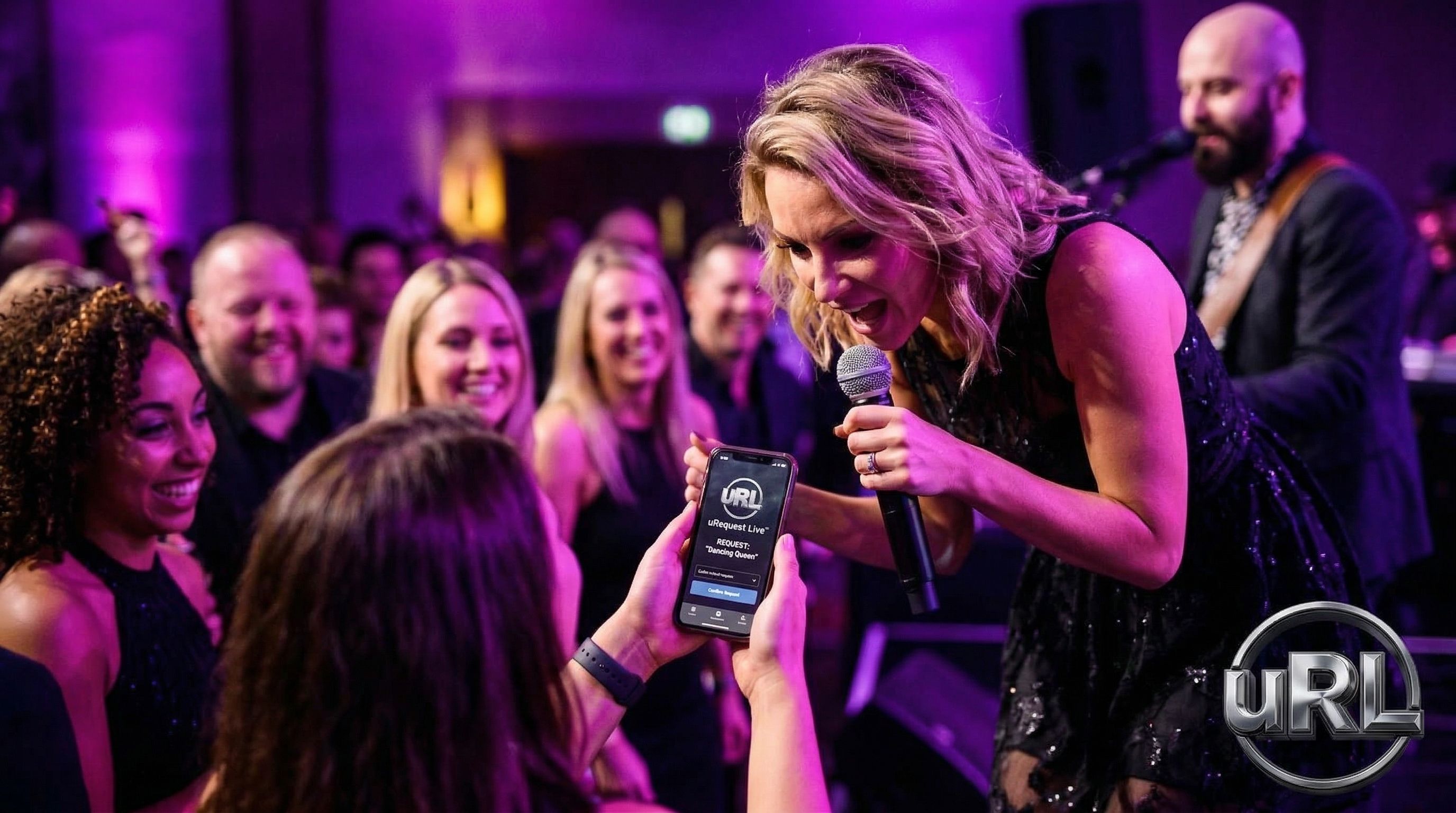
Interactive entertainment flips the model. Instead of the band dictating the experience, the audience co-creates it.
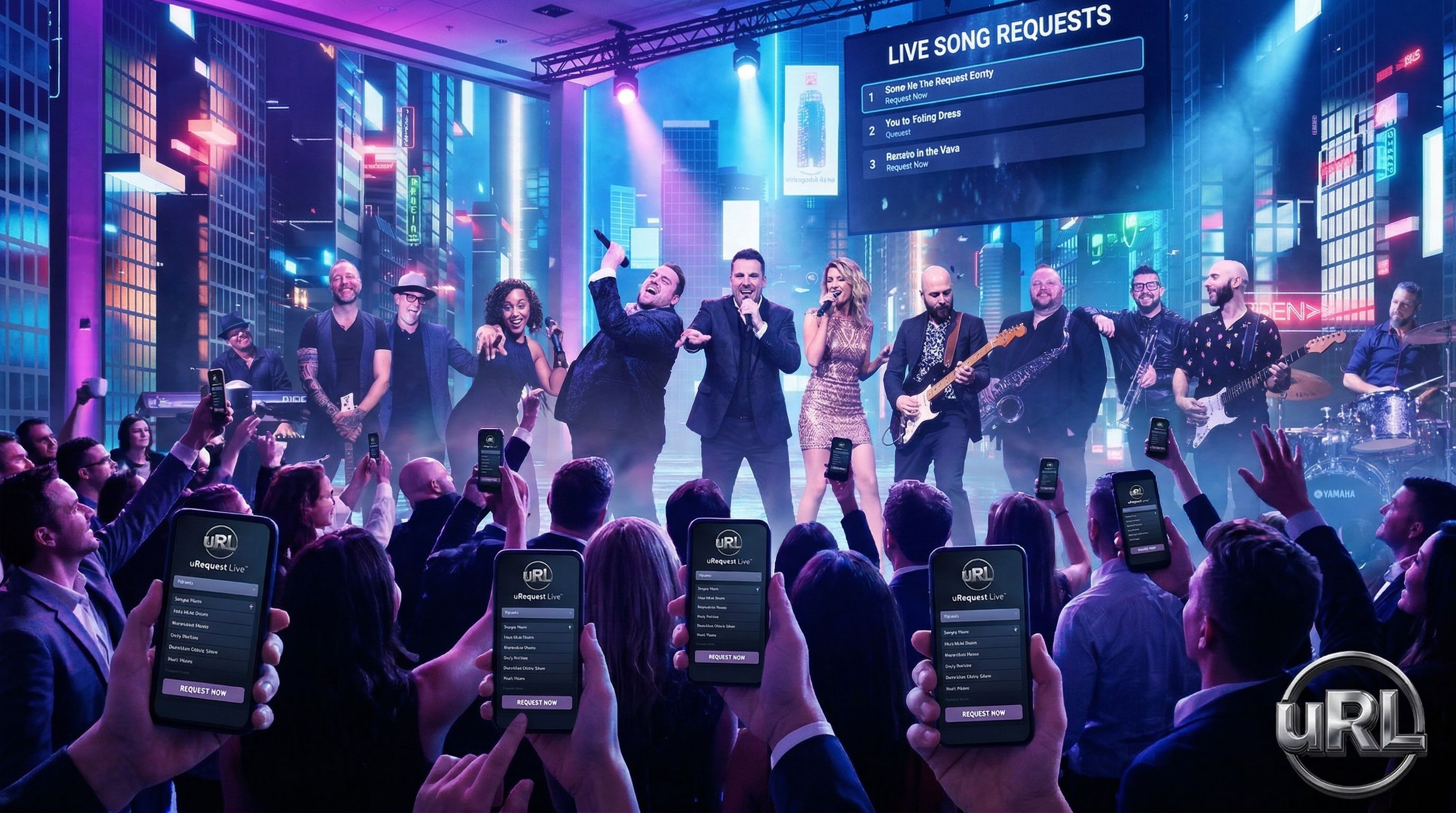
At a uRequest Live event, guests scan a QR code on their phones to access the request platform. They browse hundreds of songs, submit requests, and vote on what others have requested. The band's setlist adapts in real time based on actual demand.
The result is an event where the music always matches the mood of the room — because the room is choosing the music.
But the technology is only half the equation. What makes interactive entertainment truly different is the performance philosophy. Interactive bands are trained to break the fourth wall. They invite guests on stage for live karaoke moments. They acknowledge requests from the stage. They create moments that make individual guests feel seen.
The Data: Side-by-Side Comparison
Here's what we see across hundreds of events when comparing traditional and interactive formats:
| Metric | Traditional Band | Interactive Band |
|---|---|---|
| Dance floor participation | 23% | 61% |
| Average stay duration | 2.1 hrs | 3.4 hrs |
| Post-event satisfaction (NPS) | 42 | 78 |
| Social media mentions | 8 avg | 34 avg |
| Rebooking rate | 31% | 72% |
The rebooking rate is particularly telling. When event planners experience the difference firsthand, nearly three-quarters come back. That's not loyalty to a brand. That's loyalty to results.
The Canadian Corporate Market Is Shifting
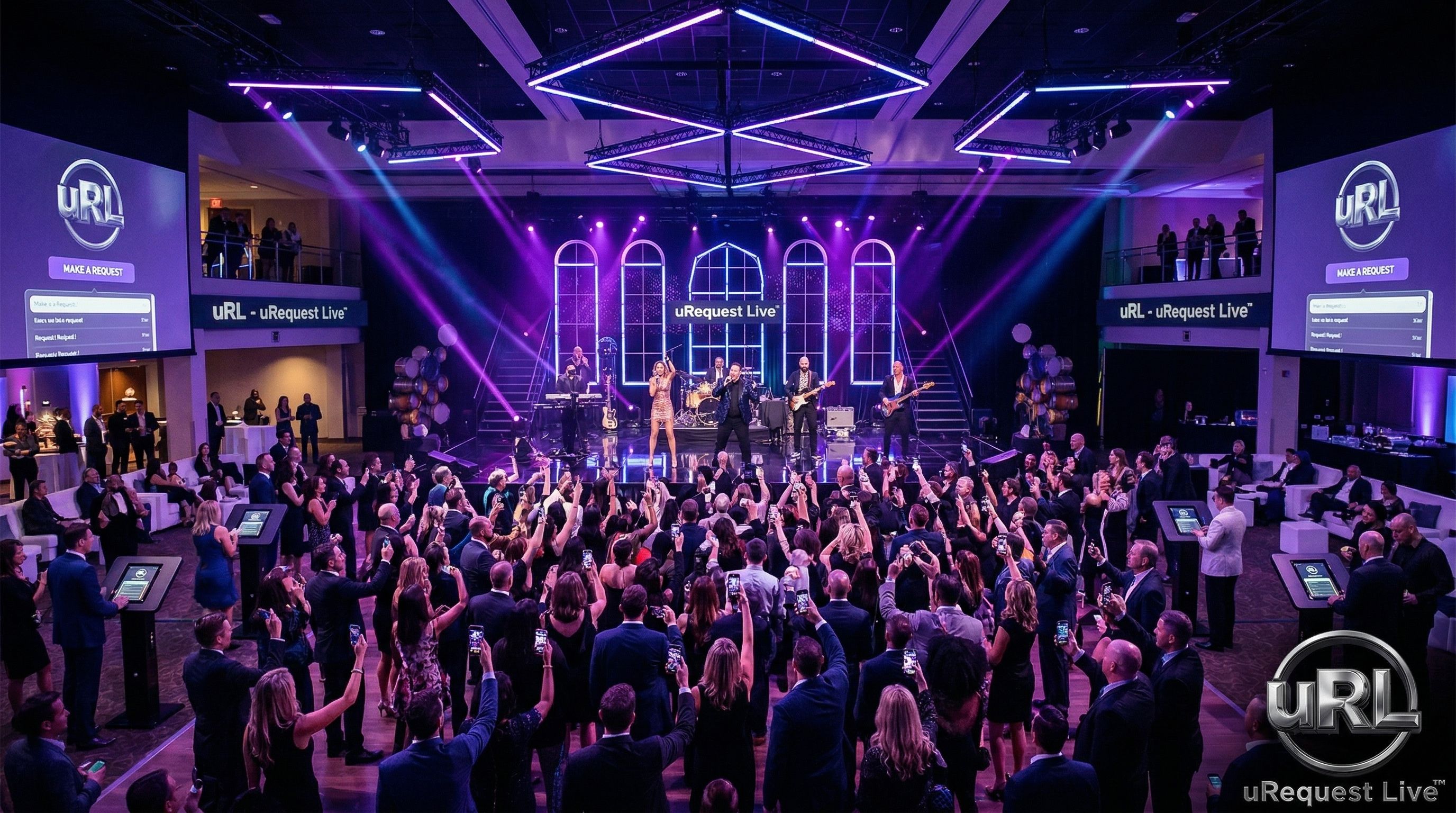
Toronto's corporate event scene has been one of the fastest to adopt interactive entertainment. Companies like Shopify, RBC, and TD have all moved toward interactive formats for their major events in the last two years.
The reason is straightforward: Canadian companies are investing more strategically in employee experience. With remote and hybrid work reshaping how teams connect, the in-person events that do happen carry more weight. A mediocre gala with a background band doesn't cut it anymore. These events need to create genuine connection — and interactivity is the mechanism that delivers it.
When Traditional Still Makes Sense
Fair is fair — there are scenarios where a traditional band is the right call. Intimate cocktail events under 50 guests where the music is ambient. Corporate ceremonies where the entertainment is performative, not participatory. Situations where the client specifically wants a curated, controlled musical experience.
But for any event where the goal is engagement, energy, and memorable experiences — and that's the vast majority of corporate events — interactive entertainment is no longer the future. It's the standard.
Bottom Line: The question is no longer "should we try interactive entertainment?" It's "can we afford not to?" When 72% of planners who try it rebook, the market is sending a clear signal.
Frequently Asked Questions
What is interactive entertainment at corporate events?
Interactive entertainment puts the audience in control of the experience. Instead of passively watching a band perform a pre-set list, attendees can request songs in real time, vote on what gets played next, and even join the band on stage for live karaoke moments. The result is an event where every guest feels like a participant, not a spectator.
Is interactive entertainment more expensive than a traditional band?
Interactive bands typically cost 15-30% more than traditional cover bands due to the additional technology, broader repertoire requirements, and specialized performers. However, the ROI is significantly higher — events with interactive entertainment see 40-70% higher engagement scores and stronger post-event satisfaction ratings.
Can interactive entertainment work for formal corporate galas?
Absolutely. Interactive entertainment is scalable — the technology operates behind the scenes during formal segments, and the interactivity ramps up during the dance and social portions. Many of our most successful events are black-tie galas where the transition from elegant dinner music to interactive party is seamless.
How does song request technology work at live events?
Guests scan a QR code or visit a URL on their phones to access a song request interface. They can browse the band's repertoire, submit requests, and vote on other requests. The band's setlist updates in real time based on audience demand, with built-in content filters ensuring everything stays event-appropriate.
See the Difference for Yourself
Experience what happens when your audience drives the music. Book a consultation to learn how interactive entertainment transforms corporate events.
Book a ConsultationArthur Kerekes
Head of Client Experience at uRequest Live
Arthur has spent over a decade in live entertainment, working with corporate clients across North America to create unforgettable event experiences. He leads client strategy at uRequest Live, where data-driven song selection meets world-class live performance.
Related Articles
The ROI of Live Entertainment at Corporate Events
Hard numbers on what live entertainment actually returns on investment.
7 Signs You Need to Upgrade Your Corporate Entertainment
Recognize these red flags? It might be time for a change.
Why Toronto Companies Are Switching to Interactive Bands
The Toronto corporate market's rapid shift toward interactive entertainment.