
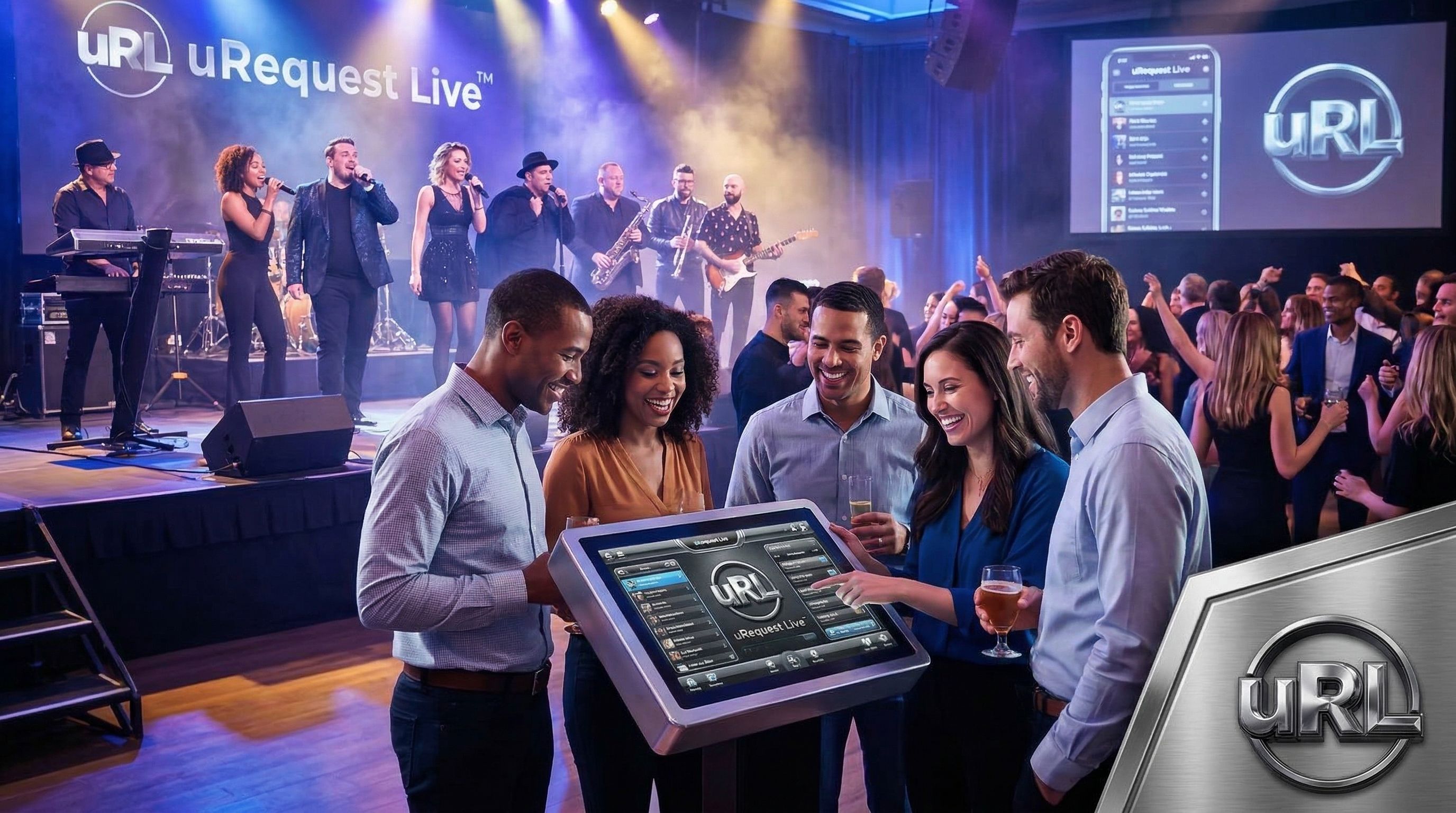
The conversation about corporate entertainment budget usually goes one of two ways. Either the CFO asks "why are we spending $15,000 on a band?" or the event planner explains that entertainment isn't a cost — it's an investment with measurable returns.
If you've ever had to defend an entertainment budget, this article gives you the data to win that conversation.
The Employee Retention Connection
Gallup's 2025 State of the Workplace report found that companies with high employee engagement scores — which includes quality of company social events — see 23% higher profitability and 18% lower turnover than companies with disengaged workforces.
That turnover number is where the real math lives. The cost of replacing a mid-level employee in Canada averages $30,000-$50,000 when you factor in recruiting, onboarding, lost productivity, and institutional knowledge drain. If a memorable corporate event helps retain even two or three employees who were considering leaving, the entertainment investment pays for itself several times over.
This isn't theoretical. A Toronto-based financial services firm we work with tracked their attrition numbers before and after they upgraded from a DJ to an interactive live band for their annual gala. Their voluntary turnover within 90 days of the event dropped from 8.2% to 3.1% year-over-year. They can't attribute all of that to the entertainment, but their internal surveys showed that event satisfaction was the single largest positive mover in their employee engagement score.
Brand Perception and Client Events
For client-facing events — product launches, appreciation dinners, industry conferences — the entertainment directly shapes how attendees perceive your brand.
A study by EventMB found that 87% of event attendees form lasting opinions about a brand based on the quality of the event experience. Entertainment is the single most memorable element of any event — more than the venue, the food, the speakers, or the swag bags.
The Memory Equation: When people recall a corporate event 6 months later, the entertainment is the first thing they mention 73% of the time. Not the keynote speaker. Not the food. The entertainment.
Think about what that means for client relationships. If you host a client appreciation dinner and the entertainment is mediocre, that mediocrity becomes associated with your brand. If the entertainment is exceptional — if clients are dancing, laughing, requesting songs, posting on social media — your brand becomes associated with excellence and innovation.

The Social Media Multiplier
Live entertainment generates organic social media content at rates that no other event element can match. Our data shows that events with interactive live bands generate an average of 34 social media posts per event, compared to 8 for events with traditional bands and 3 for DJ-only events.
Each of those posts has an average reach of 300-500 impressions among the poster's network — predominantly other professionals in the same industry. That's 10,000-17,000 impressions of your company's event reaching exactly the audience you'd want to reach.
What would that cost in paid social advertising? At a conservative $5-8 CPM, you're looking at $50-136 in equivalent ad spend per event. Not massive on its own, but the qualitative difference between a paid ad and a colleague's authentic Instagram story from a great event is immeasurable. Social proof from real experiences drives perception in ways advertising cannot.
Guest Engagement Duration
Here's a metric that directly impacts your per-head ROI: how long guests actually stay at the event.
Events with background music or a DJ see an average guest stay of 2.1 hours. Events with a traditional cover band: 2.8 hours. Events with an interactive band and song request technology: 3.4 hours.
That extra hour of engagement represents more networking, more relationship building, more dancing, more memories. For client events, it means more face time with your sales team. For employee events, it means more team bonding across departments.
When you're spending $200-400 per head on a corporate event (venue, catering, decor, production), every additional minute of meaningful engagement improves the cost-effectiveness of that spend.
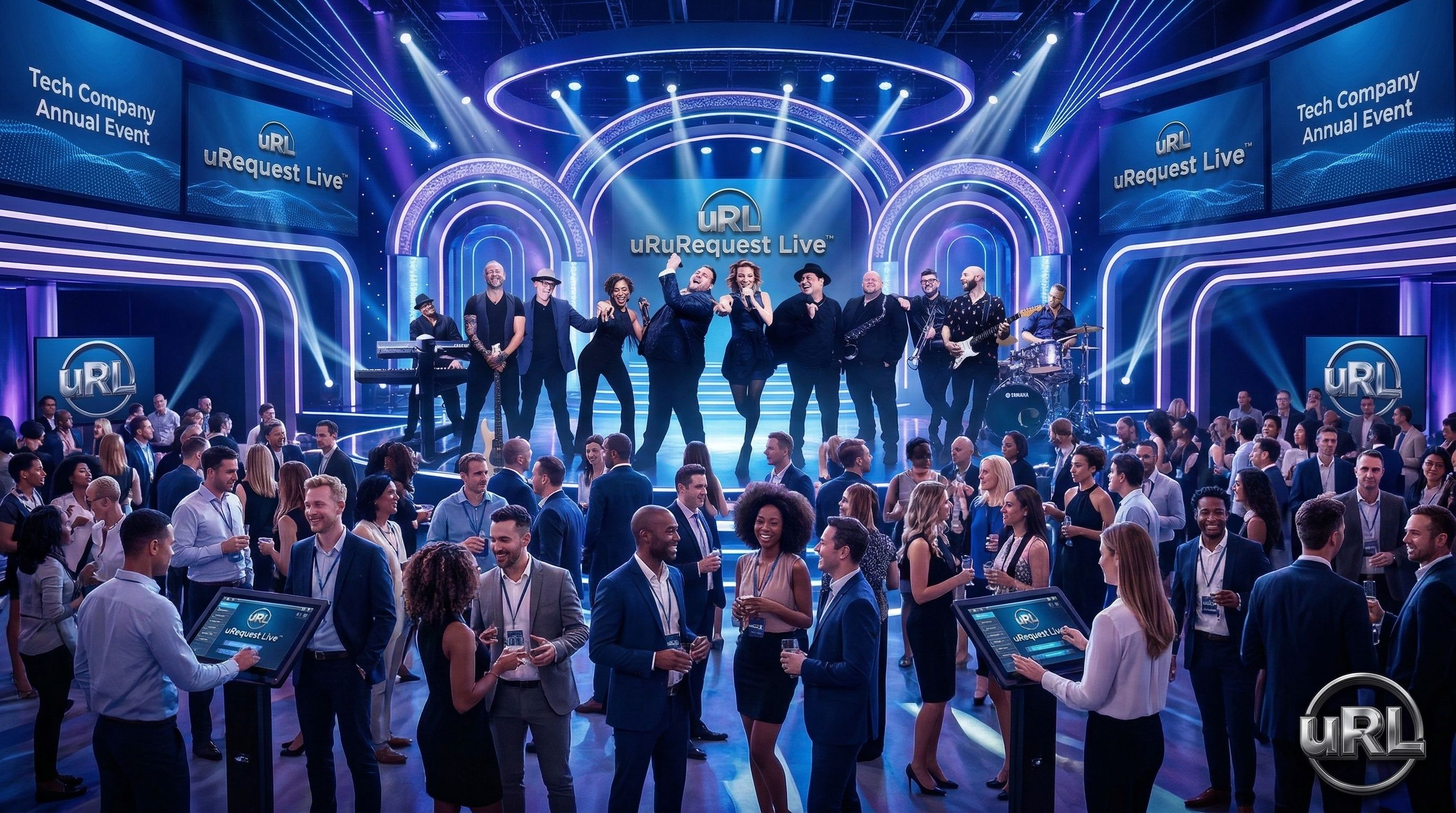
The Budget Framework
So what should you actually spend? Here's the framework we recommend to our clients:
Total event budget under $50,000: Allocate 15-20% for entertainment. At this level, a strong 5-6 piece interactive band with basic production delivers the best value.
Total event budget $50,000-$150,000: Allocate 18-25% for entertainment and production. This gets you a full-size band, professional sound and lighting, and interactive technology integration.
Total event budget over $150,000: Allocate 20-30% for entertainment. At this scale, entertainment should be the centerpiece — the element that guests talk about for months afterward. Custom arrangements, themed sets, full production with lighting design.
How to Measure It
You can't improve what you don't measure. Here are the four metrics that matter most:
1. Post-event NPS scores. Survey attendees within 48 hours. Ask specifically about the entertainment alongside overall event satisfaction. Track this year over year.
2. Social media engagement. Monitor branded hashtags, location tags, and mentions within 72 hours of the event. Count not just posts but engagement (likes, comments, shares).
3. Platform analytics. If using interactive entertainment, your request platform generates granular data: number of unique participants, total requests, peak engagement windows, and participation rate.
4. Long-term outcomes. For employee events: engagement survey scores at the next quarterly check-in. For client events: pipeline progression of attendees within 6 months.
The Bottom Line: When a $15,000 entertainment investment contributes to retaining even one key employee (saving $30,000-$50,000 in replacement costs), improving client pipeline conversion by even 2-3%, and generating thousands of organic brand impressions — the ROI conversation shifts from "can we afford this?" to "can we afford not to?"
Frequently Asked Questions
How much should a company spend on corporate event entertainment?
Industry benchmarks suggest 15-25% of the total event budget. For a mid-size gala (200-500 guests), that typically ranges from $8,000 to $25,000 for a premium live band with full production.
Does live entertainment actually improve employee retention?
Companies with high employee engagement — which includes quality social events — see 23% higher profitability and 18% lower turnover. Memorable shared experiences build emotional connections that casual perks cannot replicate.
How do you measure the ROI of corporate event entertainment?
Track post-event NPS scores, social media engagement within 48 hours, employee engagement survey deltas, and rebooking/referral rates for client-facing events. Interactive entertainment platforms provide real-time analytics on participation rates and engagement windows.
Is live entertainment worth the extra cost over a DJ?
For events over 100 guests where engagement is a primary goal, yes. Live bands generate 3-4x more social media content, 2.4x higher satisfaction scores, and significantly longer guest stay times compared to DJ-only events.
See the ROI for Your Event
We'll walk you through the numbers specific to your event size, industry, and goals.
Get a Custom ROI AnalysisArthur Kerekes
Head of Client Experience at uRequest Live
Arthur has spent over a decade in live entertainment, working with corporate clients across North America to create unforgettable event experiences. He leads client strategy at uRequest Live, where data-driven song selection meets world-class live performance.
Related Articles
Why Interactive Entertainment Outperforms Traditional Bands
The data behind the shift to interactive entertainment.
Corporate Entertainment Trends Reshaping Events in 2026
What's changing in the industry this year.
7 Signs You Need to Upgrade Your Corporate Entertainment
When it's time to invest in better entertainment.