
Conference Entertainment: Beyond the Keynote Speaker
Conferences need more than keynotes and breakout sessions. Explore how entertainment fills the gaps between content blocks and transforms networking hours into relationship-building moments.
We've all been to that conference. You know the one — eight hours of presentations, a rubber chicken dinner, and a DJ playing to an empty dance floor while everyone huddles in the hotel bar instead. The content was probably excellent. The experience was forgettable.
The conference industry has a content problem disguised as an entertainment problem. Organizers pour enormous energy into speaker lineups and session programming, then treat everything between the sessions as dead space. But those in-between moments — the networking lunches, the cocktail hours, the evening galas — are where the real value of conferences happens.
The Conference Attention Curve
After sitting through four hours of presentations, the average attendee's attention is depleted. Cognitive scientists call this "decision fatigue" and "attention residue." By the time the evening event rolls around, your attendees' brains are essentially running on fumes.
This is precisely why passive entertainment fails at conferences. A concert-style performance demands sustained attention — the one thing your audience has been depleted of all day. What works instead is entertainment that's participatory and low-barrier. Something people can engage with on their own terms, dip in and out of, and enjoy without having to "pay attention."
The Networking Paradox
Conferences promise networking. Attendees list it as their primary reason for attending. Yet most conference networking formats are terrible: awkward cocktail hours where introverts cluster near the exits and extroverts dominate the center of the room.
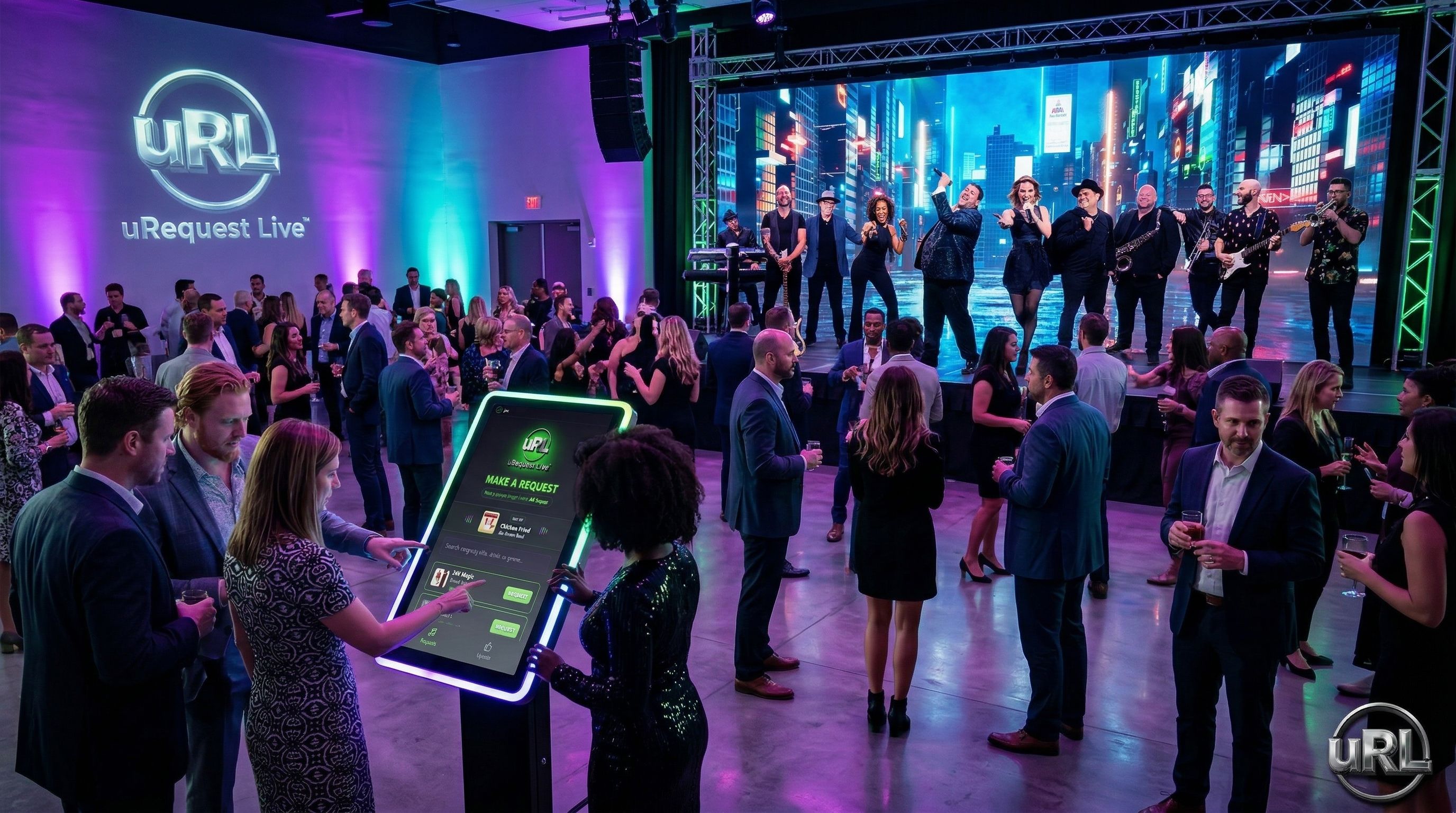
Entertainment solves the networking paradox by giving people something to do together. A song request system gives strangers a shared activity ("What did you request?" is a far better icebreaker than "So, what do you do?"). Live music creates a social lubricant that alcohol alone can't provide — and with considerably better outcomes.
Entertainment Across the Conference Timeline
Opening Night Reception
The first evening sets the tone for the entire conference. A strong opening night reception signals that this conference values the attendee experience beyond the content. An acoustic performer or jazz ensemble during cocktails, transitioning to a high-energy band or interactive act for the main event, creates an arc that builds energy and excitement for the days ahead.
Don't underestimate the power of a great first impression. Attendees who have a memorable opening night are significantly more likely to engage fully with the next day's programming. They've bonded with fellow attendees, they're energized, and they're invested in the community.
Breakout Session Transitions
The fifteen minutes between breakout sessions are usually dead time filled with bathroom breaks and phone-checking. Progressive conferences use these moments for ambient musical performances in common areas. A solo guitarist in the lobby, a pianist near the coffee station — these subtle touches transform transit time into atmosphere.
The Gala Dinner
This is the entertainment anchor of most conferences, and it's where the investment matters most. A gala with a great band becomes the story attendees tell afterward. A gala with a bad band (or worse, no entertainment) becomes a cautionary tale.
The ideal gala entertainment structure:
- Ambient music during dinner service (lower volume, conversational atmosphere)
- Brief awards or recognition segment (if applicable)
- Transition to performance mode with a strong opening number
- Interactive segment where attendees influence the setlist via song requests
- High-energy finale that sends people to the after-party buzzing
Closing Night: The Grand Finale
Closing entertainment carries extra weight because it's the last emotional impression of the conference. The peak-end rule guarantees this will disproportionately influence how attendees remember the entire multi-day experience.
Our recommendation: go bigger on closing night than opening night. Opening night builds anticipation; closing night delivers on it. If budget is limited, invest more heavily in the finale.
Conference-Specific Entertainment Considerations
Volume and Space
Conference venues present unique acoustic challenges. Hotel ballrooms have different acoustics than purpose-built concert venues. A professional event band will conduct a soundcheck that accounts for the room's characteristics — carpet vs. hard floors, ceiling height, wall materials, and the absorption effect of a room full of people.
Volume control is particularly critical at conferences. The entertainment needs to be energetic enough to fill the room but not so loud that networking conversations become impossible. Professional event musicians understand this balance intuitively — it's one of the key differences between a corporate event band and a bar band.
Diversity and Inclusion
Conference audiences are often more diverse than typical corporate events, drawing attendees from different companies, countries, and cultures. The entertainment should reflect this diversity in genre selection, energy, and accessibility. Interactive formats work particularly well because they let the audience naturally curate the music to reflect who's in the room.
Conference entertainment planning timeline:
- 6 months out: Define entertainment vision and budget allocation
- 4 months out: Book entertainment acts and confirm technical requirements
- 6 weeks out: Finalize event flow and cue sheets with entertainment
- 2 weeks out: Share attendee demographics and conference themes with performers
- Day-of: Full soundcheck and walk-through with the production team
The ROI of Conference Entertainment
Conference organizers who invest in quality entertainment see measurable returns:
- Higher return attendance — Attendees who rate the social experience highly are 2.3x more likely to register for next year
- Better NPS scores — Entertainment quality is the second-strongest predictor of Net Promoter Score (after content quality)
- Increased sponsorship value — Sponsors want their brand associated with events people enjoy. Great entertainment increases sponsorship renewals
- Social amplification — Energetic entertainment generates social media content that extends the conference's reach far beyond the ballroom
The conference that people talk about for months afterward isn't the one with the best breakout sessions. It's the one where the evening event was so good that strangers became friends on the dance floor.
Elevate Your Conference Experience
Interactive entertainment that transforms conference evenings into the highlight of the program.
Plan Your Conference EntertainmentFrequently Asked Questions
What entertainment works best for conferences?
The best conference entertainment fills the gaps between content sessions. Interactive live bands work for evening receptions and galas, acoustic performers are ideal for networking lunches and cocktail hours, and DJ sets work for after-parties. The key is matching energy levels to the context.
How do you keep conference attendees engaged during evening events?
After a full day of sessions, attendees crave experiences that don't require focused attention. Interactive music with song requests lets people engage on their own terms — they can dance, socialize, or just enjoy the atmosphere without the cognitive effort of another presentation.
Should conference entertainment be related to the conference theme?
Loosely, yes. The entertainment should complement the conference brand and audience expectations, but it doesn't need to be on-theme literally. A tech conference doesn't need a robot DJ. What matters is that the entertainment feels intentional and appropriate for the attendee demographic.
How much should you budget for conference entertainment?
For multi-day conferences, entertainment typically accounts for 8-15% of the total budget. A gala dinner with live band ranges from $5,000-$15,000 depending on the band size. Networking hour entertainment runs $1,500-$3,500 per session.