
How Music Affects Employee Engagement at Events
Discover the science and strategy behind using music to boost employee engagement at corporate events. Research-backed insights on song selection, interactivity, and emotional connection.
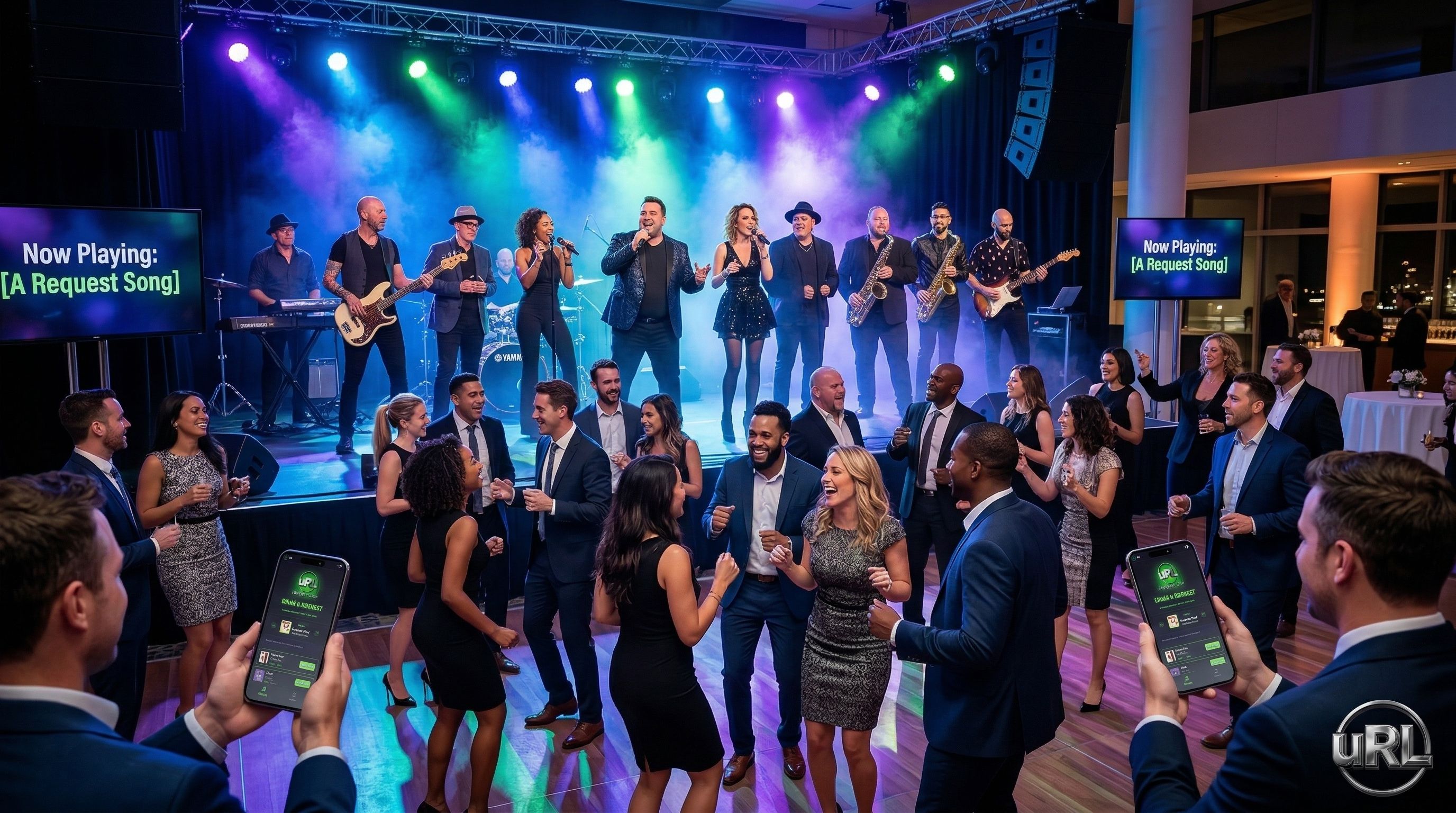
There's a moment at every corporate event where the room either comes alive or flatly dies. It usually happens about forty-five minutes in — after the opening remarks, after the first round of drinks, right around the time people start checking their phones under the table.
What separates the events that ignite from the ones that fizzle? Almost always, it's music. But not just any music — the right music, delivered the right way.
The Neuroscience of Music and Engagement
Music isn't background noise. It's a neurological event. When we hear music we connect with, our brains release dopamine — the same neurotransmitter associated with eating good food, achieving goals, and falling in love. A 2019 study published in the Proceedings of the National Academy of Sciences confirmed that music activates the brain's reward circuitry in ways that are measurably different from other auditory stimuli.
For corporate event planners, this is actionable intelligence. The right musical experience doesn't just entertain your employees — it chemically bonds them to the moment. And when that moment is associated with your company, the halo effect is significant.
Gallup's workplace research consistently shows that emotionally engaged employees are 21% more productive. The challenge has always been creating those emotional moments at scale. Music solves that problem in a way that trust falls and escape rooms never will.
Why Passive Entertainment Falls Short
Here's the uncomfortable truth about most corporate event entertainment: it treats employees like an audience. A DJ spins tracks. A band plays their setlist. People nod politely, maybe tap a foot, then go back to their conversations.
The problem isn't the talent — it's the model. Passive entertainment creates passive attendees. And passive attendees are already mentally halfway out the door.
Interactive entertainment flips this entirely. When employees have a voice in what gets played — when they can request songs, vote on the setlist, and see their choices performed live — they shift from spectators to participants. That shift changes everything.
The Participation Effect
Research from the Harvard Business Review found that active participation in group experiences increases feelings of belonging by up to 60%. In a corporate context, that translates directly to engagement metrics. Employees who feel they belong are:
- 3.5x more likely to contribute their full creative potential
- 5x more likely to stay at the company long-term
- 9.8x more likely to look forward to future company events
Song request technology transforms a standard event into a participatory experience. Suddenly, the shy accountant from finance is the hero because their song pick got the whole room dancing. That's not just fun — that's organizational bonding happening in real time.
Designing Music Experiences for Maximum Engagement
Not all musical experiences are created equal. After running hundreds of corporate events, we've identified the specific elements that maximize employee engagement through music.
1. Democratic Song Selection
The single most impactful change you can make is letting your employees choose the music. This isn't about abdicating creative control — it's about giving people agency. When employees see their song request performed live by a professional band, the emotional impact is exponentially greater than hearing the same song from a speaker.
2. Genre Diversity as a Bridge
Corporate audiences are diverse. A 200-person company event might include a 23-year-old marketing coordinator and a 58-year-old VP of operations. Music is one of the few things that bridges generational gaps without feeling forced. When the setlist moves from Fleetwood Mac to Dua Lipa to Bruno Mars because different people in the room requested those songs, you're witnessing organic cross-generational connection.
3. The Peak-End Rule
Nobel laureate Daniel Kahneman's peak-end rule tells us that people judge experiences primarily by their most intense moment and by how they end. Smart event planners use music to engineer both. A live band that builds to a crowd-chosen finale creates a peak moment that employees will associate with your company for months.
Real Numbers: Music's Impact on Event Outcomes
We've tracked engagement data across hundreds of corporate events, and the numbers tell a compelling story:
Events with interactive music vs. standard DJ setups:
- 70% higher dance floor participation
- 45% longer average stay time
- 89% of attendees rate the event "excellent" (vs. 52% with passive entertainment)
- 3.2x more social media posts from the event
That last metric matters more than you might think. When employees voluntarily post about a company event, they're broadcasting organizational pride to their networks. That's employer branding you can't buy.
The Long Game: Music and Organizational Culture
The benefits of great musical experiences extend far beyond the event itself. Companies that invest in memorable employee events build what organizational psychologists call "affective commitment" — the emotional attachment employees feel toward their organization.
A study from the Journal of Organizational Behavior found that shared positive experiences are the strongest predictor of affective commitment, outranking compensation satisfaction and even management quality. Music-driven events create exactly these shared positive experiences, at scale, in a single evening.
Building Traditions That Stick
The most engaged organizations have traditions that employees genuinely look forward to. When your annual gala becomes "the event where we get to pick the songs" rather than "the event we have to attend," you've created a tradition with gravitational pull. That's the difference between obligation and anticipation.
Practical Strategies for Event Planners
If you're planning a corporate event and want to use music strategically for engagement, here's what works:
- Start with energy mapping — Plan the emotional arc of your evening. Opening cocktails need different energy than the post-awards dance party.
- Use technology as a bridge — Song request platforms give every guest a voice, not just the ones brave enough to approach the band.
- Brief your entertainment properly — Share your company culture, audience demographics, and must-play songs. The more context the band has, the better they'll serve your team.
- Create moments of surprise — An unexpected song that resonates with your team's inside jokes or shared experiences can become the highlight of the entire evening.
- Don't underestimate the closer — The last song of the night will be the most remembered. Make it count.
The Bottom Line
Employee engagement isn't built in performance reviews or all-hands meetings. It's built in moments of genuine human connection — and few things create those moments more reliably than shared musical experiences.
The companies that understand this don't treat event entertainment as a line item to minimize. They treat it as a strategic investment in their most valuable asset: their people.
Ready to Transform Your Next Corporate Event?
See how interactive music technology can boost engagement at your next company event.
Get in Touch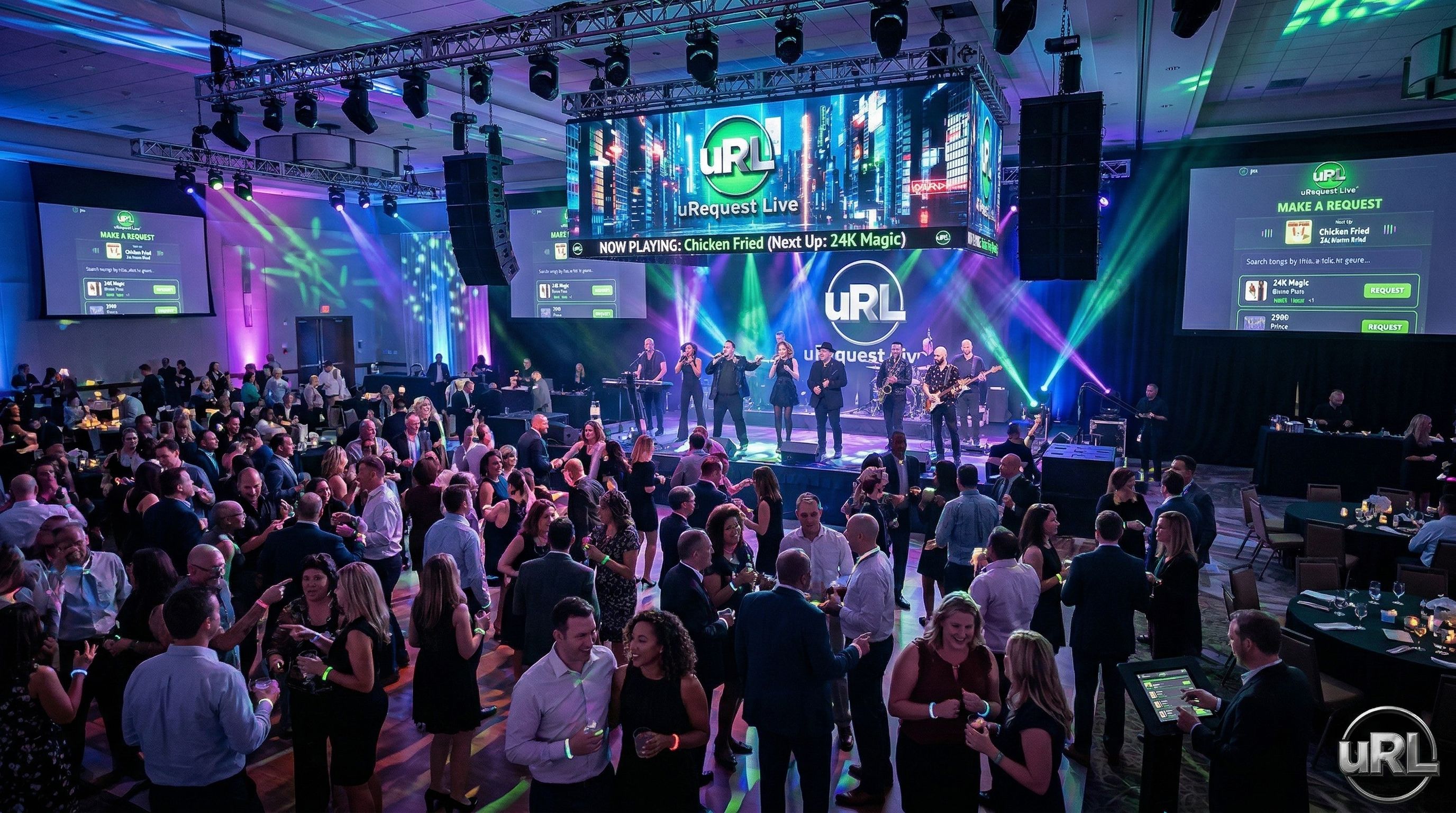
Frequently Asked Questions
How does music improve employee engagement at corporate events?
Music triggers dopamine release and creates shared emotional experiences. When employees can choose songs through interactive platforms, engagement increases by up to 70% compared to passive entertainment, as participation transforms attendees from spectators into active contributors.
What type of music works best for corporate team-building events?
A diverse mix that spans decades and genres works best. The key is variety combined with audience choice — letting employees vote on songs ensures the music resonates personally while exposing the group to different tastes, which itself becomes a bonding experience.
Can live music really impact employee retention?
Research from Gallup shows that employees who feel connected to their workplace community are 3.5x more likely to stay. Memorable shared experiences like interactive live music events build those connections faster than standard team-building exercises.
How do song request systems work at corporate events?
Guests use their smartphones to browse a curated song library, submit requests, and vote on what the band plays next. The band performs the top-voted songs live, creating a democratic, crowd-driven experience that keeps everyone invested in the show.
What is the ROI of investing in quality entertainment for employee events?
Companies that invest in high-quality employee events report 21% higher profitability according to Gallup research. The ROI extends beyond the event night — improved morale, stronger team bonds, and reduced turnover all contribute to long-term returns.