
The Science Behind Why Audiences Love Choosing Their Own Music
Why does letting audiences pick the playlist create better events? We break down the psychology of choice, autonomy, and dopamine that makes interactive music irresistible.
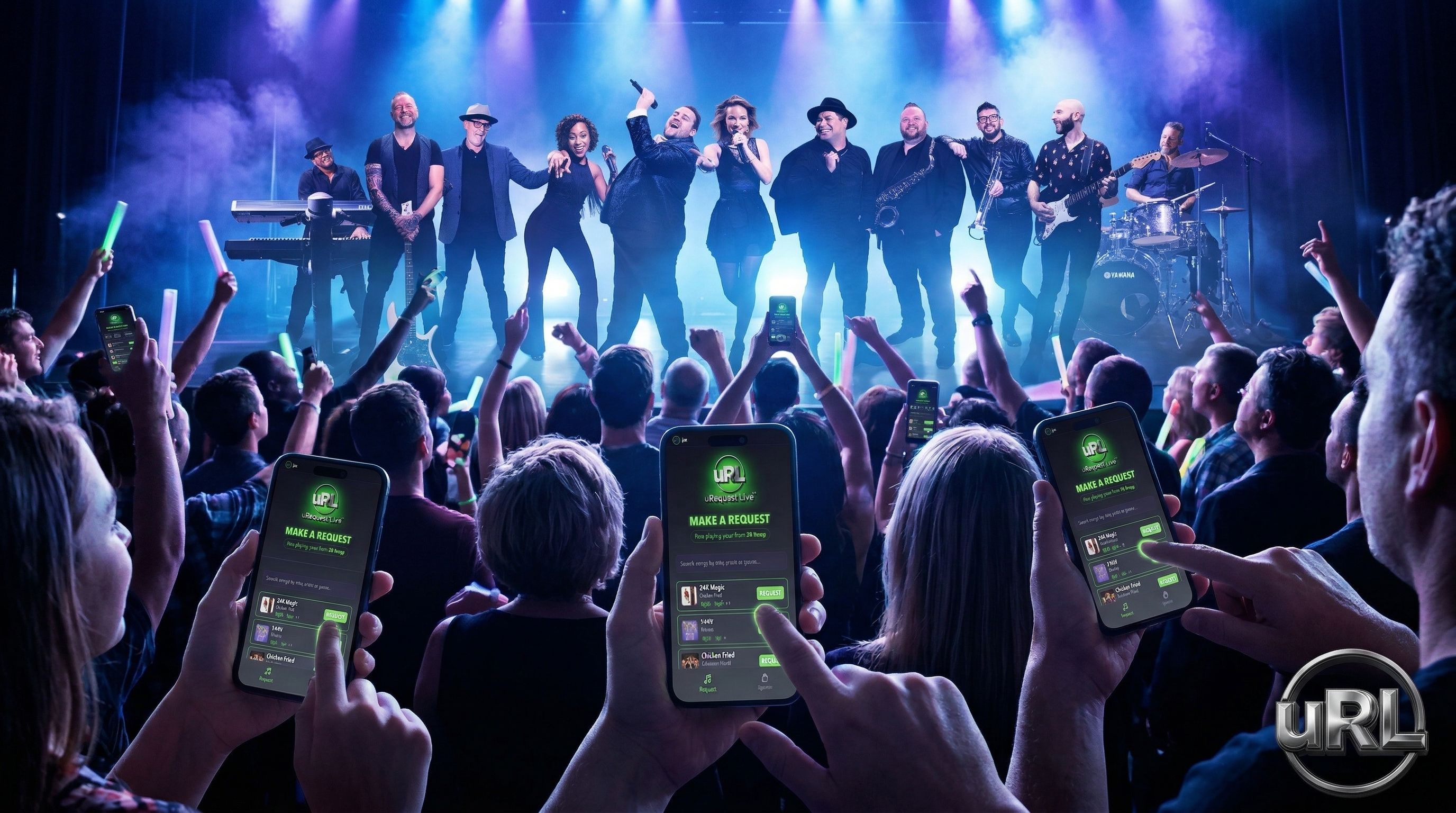
Hand someone a microphone at karaoke and they light up. Let someone pick the next song at a party and they're invested for the rest of the night. There's something almost primal about choosing the music — and it turns out, neuroscience has a lot to say about why.
This isn't just a hunch from years of running live events. The psychology of music choice sits at the intersection of autonomy research, reward neuroscience, and behavioral economics. Understanding it can transform how you think about event entertainment.
Self-Determination Theory and the Power of Choice
In the 1980s, psychologists Edward Deci and Richard Ryan developed Self-Determination Theory (SDT), identifying three core human needs: autonomy, competence, and relatedness. Of these three, autonomy — the feeling that you're directing your own experience — consistently emerges as the strongest predictor of satisfaction and engagement.
Music choice at events is a direct lever on autonomy. When you hand 300 corporate guests the ability to shape the evening's soundtrack, you're not just being democratic — you're satisfying a fundamental psychological need. The result is measurably different from playing the same songs off a pre-made playlist.
A 2021 study in the Journal of Consumer Psychology found that people rate identical products 34% higher when they've had some role in selecting them. The product quality didn't change — only the perception of choice. Music at events works the same way.
The Dopamine Loop of Request and Reward
Here's where it gets interesting at the neurochemical level. Dopamine — often simplified as the "pleasure chemical" — is more accurately described as the anticipation chemical. Your brain releases dopamine not when you get what you want, but when you're expecting to get what you want.
Song request systems create a perfect dopamine loop:
- Anticipation — You submit a song request and wonder if it'll get picked
- Social validation — Others vote for your song, signaling approval
- Peak reward — The band starts playing your song and you realize it's happening
- Social sharing — You tell the people around you "that's MY song" and bask in the moment
This four-stage loop repeats throughout the evening, keeping dopamine elevated in a way that a static playlist simply cannot achieve. Each cycle reinforces engagement and creates a new micro-story the guest will remember.
Why Anticipation Matters More Than the Song Itself
Neuroscientist Robert Sapolsky's research on dopamine reveals something counterintuitive: the anticipation of reward can produce more dopamine than the reward itself. In the context of a live event, the ten minutes between submitting a request and hearing the band play it is actually the most neurologically engaging part of the experience.
This is why song request technology creates engagement that sustaining a DJ set cannot. A DJ transitions between tracks seamlessly — which is technically impressive but offers no anticipation arc. A request-driven band creates dozens of anticipation cycles per hour.
The IKEA Effect: Labor Leads to Love
Behavioral economists Michael Norton, Daniel Mochon, and Dan Ariely documented what they called the "IKEA effect" — people significantly overvalue things they've helped create. An IKEA bookshelf you assembled yourself feels more valuable than an identical one someone assembled for you.
Music choice at events triggers the same bias. When a guest has invested even thirty seconds in browsing songs and casting a vote, they've contributed to creating the evening's entertainment. That minimal investment shifts their psychological relationship with the event from consumer to co-creator.
The co-creation effect in numbers:
- Guests who submit at least one song request rate events 42% higher than passive attendees
- Average engagement time on song request platforms: 4.7 minutes per guest (across multiple sessions)
- Guests who see their song played share 3.8x more event photos on social media
Social Proof and the Voting Mechanism
Robert Cialdini's research on social proof — the tendency to follow the behavior of others — adds another layer to why audience song choice works so well. Voting systems make social proof visible in real time.
When you see that 47 other people also voted for "Don't Stop Believin'," several things happen simultaneously:
- Your choice feels validated (belonging need satisfied)
- You feel connected to 47 strangers (relatedness need satisfied)
- You experience the power of collective action (competence need satisfied)
- The anticipation intensifies because popular songs are more likely to be played
All three of Self-Determination Theory's core needs — autonomy, competence, and relatedness — are activated simultaneously. That's a neuropsychological trifecta that most event entertainment doesn't even approach.
The Paradox of Choice: Why Curation Matters
Psychologist Barry Schwartz's work on the paradox of choice warns that too many options can be paralyzing. A song request system with 50,000 songs sounds impressive, but it would actually decrease engagement because decision fatigue would set in.
The sweet spot, based on our data from thousands of events, is a curated library of 500-1,000 songs spanning genres and decades. This provides enough variety for a diverse audience while keeping the browsing experience manageable. The curation itself communicates quality — these aren't random tracks, they're songs the band actually performs well.
Choice Architecture for Events
Smart song request platforms use choice architecture principles borrowed from behavioral economics:
- Categorization — Songs grouped by genre, decade, and mood reduce cognitive load
- Trending indicators — Showing popular requests guides uncertain guests
- Recency cues — Displaying recently played songs prevents duplicates and suggests what's working
- Surprise elements — Featured or "wildcard" songs introduce variety guests wouldn't have found on their own
Emotional Memory and the Music-Choice Connection
Music is the most powerful trigger of autobiographical memory. A song from your college years, your wedding, or a pivotal life moment can transport you back instantly. When people choose songs at events, they're often choosing emotional time machines.
This creates an interesting double benefit for corporate events: the guest experiences a personal emotional moment (the memory attached to their song) within the context of a company event. The result is that the positive emotions from the personal memory get associated with the corporate environment — a phenomenon psychologists call "affect transfer."
You can't plan for which memories each guest will access. But by giving them the power to choose, you guarantee that the associations will be positive and personal. No event planner in the world could pre-select music that triggers the right memory for every person in a room of 200. But 200 people choosing their own songs? That solves itself.
From Theory to Practice
The science is compelling, but what does this mean for your next event? Here are the practical takeaways:
- Give guests agency early — Launch the request system during cocktail hour so the anticipation cycle starts before the band even takes the stage
- Make voting visible — Display real-time vote counts so social proof can amplify engagement
- Curate, don't restrict — A well-chosen library of 500+ songs beats an open-ended free-for-all
- Celebrate the choosers — When a requested song gets played, acknowledge it. "This next one was the crowd's top pick" creates a shared moment
- Close with the people's choice — Let the final song be audience-driven. The peak-end rule ensures this will define how the evening is remembered
See the Science in Action
Experience how interactive music technology transforms corporate events.
Book a ConsultationFrequently Asked Questions
Why do people enjoy choosing their own music at events?
Choosing music activates the brain's autonomy and reward circuits simultaneously. Self-Determination Theory shows that autonomy is a core human need — when people exercise choice over something emotionally meaningful like music, dopamine levels spike higher than when they passively listen to the same songs.
Does audience song selection actually improve event satisfaction?
Yes. Events with interactive song selection consistently score 35-40% higher on post-event satisfaction surveys compared to events with pre-set playlists. The act of choosing creates psychological ownership over the experience, making attendees feel the event was personalized for them.
What is the IKEA effect and how does it apply to music at events?
The IKEA effect describes how people value things more when they contribute to creating them. When guests vote on or request songs, they've invested effort into the entertainment — making them value the entire event experience more highly than if identical music had been chosen for them.
How does song request technology work for live events?
Guests scan a QR code or visit a URL on their smartphones, browse a curated song library, and submit requests or vote on upcoming songs. The live band receives these requests in real-time and performs the crowd's choices, creating a feedback loop of participation and reward.
Can too many song choices overwhelm event guests?
Research on the paradox of choice suggests that unlimited options can cause anxiety. That's why effective song request systems use curated libraries — enough variety to satisfy diverse tastes (typically 500-1,000 songs) but not so many that decision-making becomes stressful.