
Why Event Planners Love Song Request Technology
From predictable outcomes to real-time crowd data, discover why professional event planners are increasingly choosing interactive song request systems for their corporate clients.
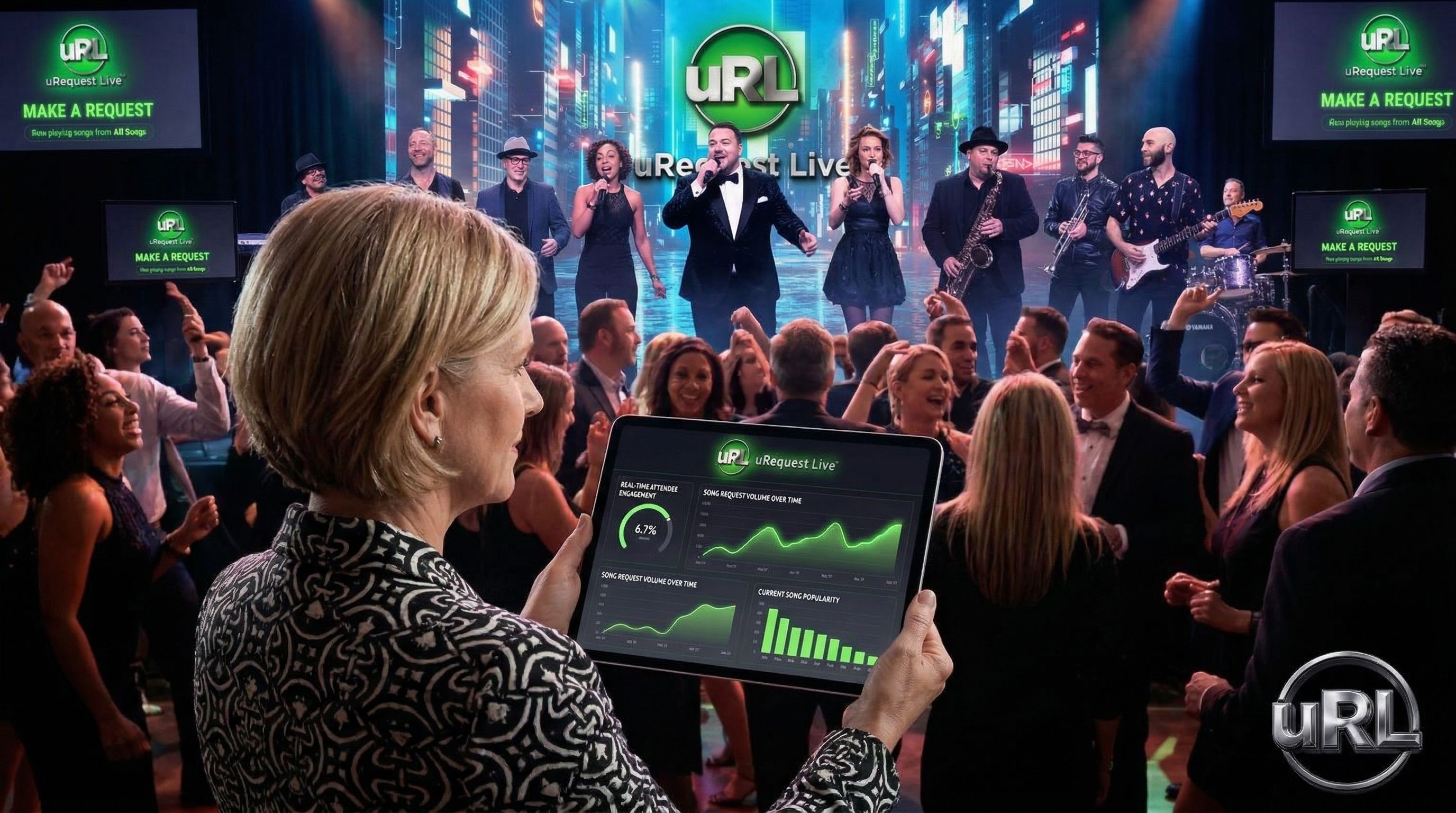
Event planners are professional worriers. It's what makes them great at their jobs. They anticipate problems, build contingencies, and stress-test every detail of an event months before guests walk through the door. The entertainment portion of any event — particularly the "will people actually enjoy it?" question — is one of the biggest sources of that anxiety.
Song request technology doesn't eliminate the worry entirely (nothing does). But it fundamentally changes the risk profile of event entertainment by putting the audience in control of their own experience. And for planners, that shift is transformative.
The Planner's Entertainment Dilemma
Every planner has lived this scenario: you book a band based on their demo reel, reviews, and a brief conversation about song preferences. The band shows up, plays well, but the audience doesn't connect. Maybe the crowd skews younger than expected. Maybe the client's company culture is more conservative than the band anticipated. Maybe the music is objectively good but subjectively wrong for this specific room.
The planner gets the blame. The band didn't read the room. The client is politely disappointed. Nobody's at fault, exactly — but the outcome is suboptimal, and the planner carries that weight.
Interactive song request technology addresses this problem structurally, not anecdotally. Instead of hoping the band guesses right, the system ensures they know exactly what the audience wants — because the audience tells them, in real time.
Five Reasons Planners Are Making the Switch
1. Predictable Engagement
The single most valuable thing song request technology gives planners is predictability. When 70%+ of your guests are actively using the platform within 30 minutes, you don't have to wonder whether the entertainment is working. You can see it in real time.
This is a fundamental shift from the traditional entertainment model, where success is measured retroactively ("How was the band?" asks the post-event survey). With request technology, success is visible as it happens. The planner can breathe.
2. Built-In Crowd Reading
Even the best bands occasionally misread a room. Song request systems eliminate guesswork by providing direct audience input. The crowd's preferences are visible data, not vibes. If the room wants more 90s hip-hop and less classic rock, the data shows it immediately — no need for the band to figure it out three songs too late.
3. Post-Event Data and ROI Justification
Corporate event planners increasingly need to justify entertainment spending with data. "The band was great" doesn't cut it in a budget review. But "78% of attendees actively engaged with the entertainment platform, with peak participation at 9:15 PM and an average of 3.2 interactions per guest" — that's a number you can put in a report.
Data points available to planners post-event:
- Total unique participants and participation rate
- Peak engagement windows (exact timestamps)
- Most requested songs and genres
- Average session duration per user
- Request-to-play conversion rate
- Comparative data across events (for repeat clients)
4. Client Customization Without Client Micromanagement
Every client has opinions about music. Some want all Top 40. Others insist on no explicit content. Some have a list of must-play songs for specific moments. Without technology, these requirements are communicated verbally to the band and executed with varying degrees of accuracy.
Song request platforms give planners a structured interface for client preferences: curated libraries, blocked songs, VIP priority requests, timed must-plays, and genre filters. The client gets exactly what they want, the band knows exactly what's expected, and the planner has a documented system instead of hoping everyone remembers the conversation from three months ago.
5. Differentiation in a Competitive Market
Event planning is a competitive industry. Offering interactive entertainment technology differentiates planners from competitors still booking conventional bands or DJs. Clients increasingly expect technology-forward solutions, and planners who deliver them win more business.
Several planners we work with now lead their pitches with our technology. They don't sell "a band" — they sell "an interactive entertainment experience with real-time audience participation." The frame is different, the perceived value is higher, and the win rate reflects it.
The Trust Factor
Here's what planners tell us most often: the technology makes them trust the entertainment outcome. With a traditional band, there's always an element of hope — hope the band reads the room correctly, hope the setlist lands, hope the energy matches the moment. With request technology, hope is replaced by data.
That doesn't mean the human element disappears. The band still needs to be talented, professional, and adaptable. But the technology ensures that their talent is directed at the right songs, at the right moments, for the right audience. It's talent guided by intelligence rather than guesswork.
Implementation: What Planners Need to Know
Integrating song request technology into your event is straightforward, but here are the practical details planners ask about:
- WiFi requirements — The system works on cellular data, so no venue WiFi dependency. However, we recommend confirming cellular signal strength at the venue for optimal performance.
- Guest onboarding — QR codes on table cards, bar menus, or projected screens. Guests scan and they're in — no app download, no account creation.
- Timeline — The system can go live during cocktails (building anticipation) or when the band starts. Most planners prefer launching early to maximize engagement time.
- Staff training — None required. The band and their tech team manage the platform. The planner's role is simply to approve the curated library and any restrictions beforehand.
Partner With Us for Your Next Event
Join hundreds of event planners who've upgraded their entertainment game.
Get in TouchFrequently Asked Questions
How does song request technology help event planners?
It solves three major planner pain points: unpredictable audience engagement, entertainment that doesn't match the crowd, and post-event justification of entertainment spend.
Is song request technology reliable for high-stakes corporate events?
Professional systems run on redundant servers with offline fallback modes. At uRequest Live, we've had 99.9% uptime across thousands of events.
Do guests actually use song request systems?
Adoption rates consistently exceed expectations. Across our events, 65-80% of guests submit at least one request within the first 30 minutes.
Can event planners control what songs are available?
Absolutely. Planners can customize the song library, block specific genres or songs, add must-play tracks, and set time-based restrictions.
What data do event planners get from song request systems?
Post-event reports include total participation rates, peak engagement times, most popular requests, genre preferences, and audience demographic insights.