
The Future of Event Entertainment: AI, Interactivity & Live Music
Where is event entertainment headed? A thought leadership piece on AI-enhanced performances, hyper-personalization, and why the human element will always be irreplaceable.
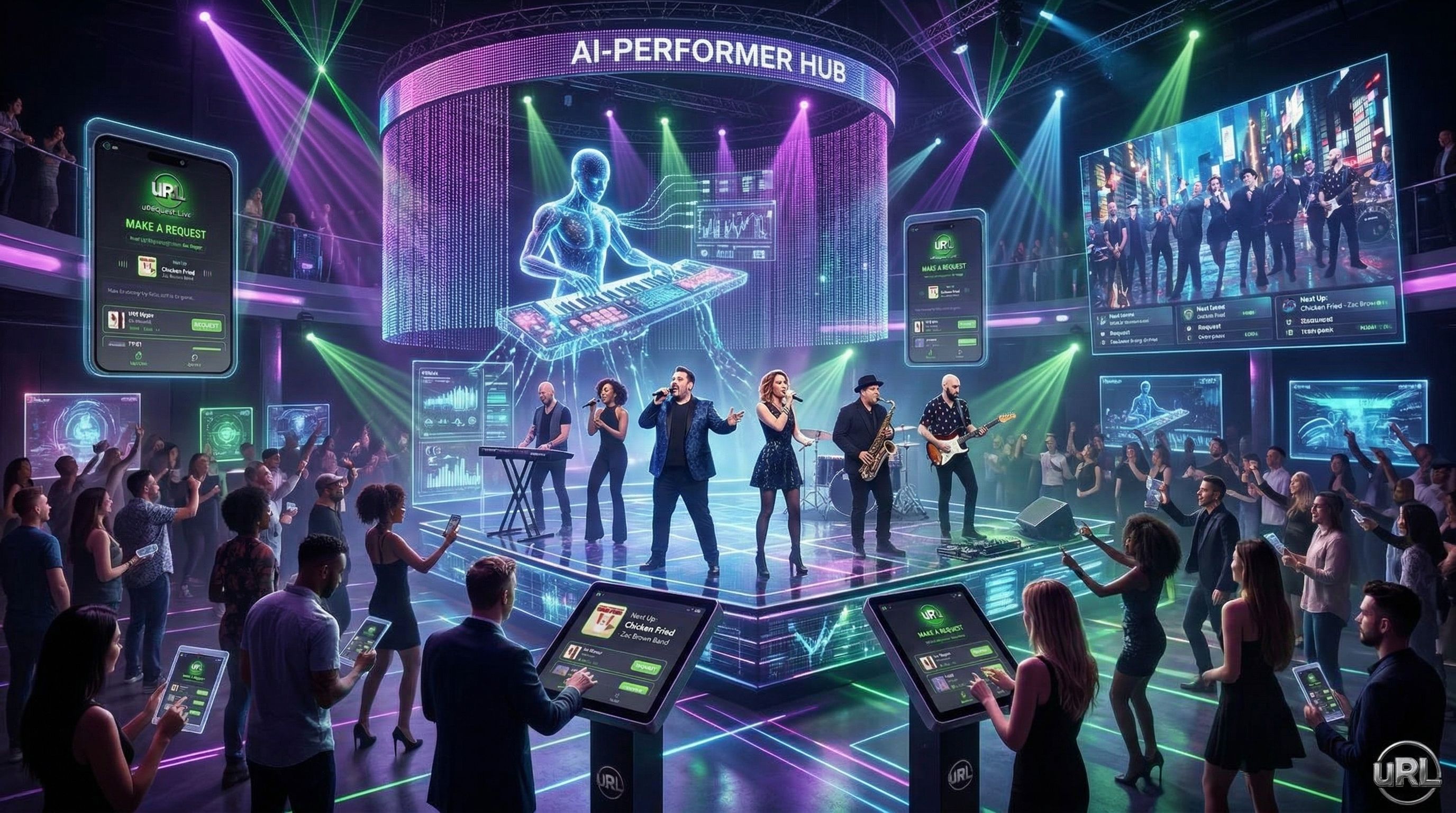
Every decade, someone predicts the death of live music. Synthesizers were supposed to kill it in the 80s. Digital downloads in the 2000s. Streaming in the 2010s. And now, inevitably, AI in the 2020s.
They've been wrong every time. Not because the technology wasn't transformative — it was. But because they misunderstood what live music actually provides. It's not about perfect sound reproduction. It's about the irreducible human experience of watching other humans create something beautiful in real time, together. That doesn't get automated away.
What does change — and is changing rapidly — is everything around the performance. How audiences interact, how musicians adapt, how events are personalized, and how the experience extends beyond the physical venue. This is where AI and technology are reshaping event entertainment in genuinely exciting ways.
AI-Enhanced, Not AI-Replaced
The most productive way to think about AI in event entertainment is as amplification, not replacement. A great musician with AI tools is like a great photographer with Photoshop — the tool enhances the artist's capabilities without replacing their vision, talent, or emotional intelligence.
Intelligent Setlist Optimization
Current song request platforms let audiences vote on what the band plays next. The next generation will go further. AI algorithms analyzing real-time crowd response — dance floor density, audio energy levels, request patterns — will recommend optimal song sequences. Not what the crowd says they want (people often vote for nostalgic songs they won't actually dance to), but what will actually maximize energy based on behavioral data.
The musician still makes the final call. The AI provides intelligence. The combination of human intuition and machine analysis creates better outcomes than either alone.
Real-Time Crowd Sentiment Analysis
Computer vision and audio analysis are approaching a level where real-time crowd mood assessment is viable. Cameras (with privacy-appropriate processing) can measure crowd density on the dance floor, movement intensity, and spatial patterns. Audio sensors can measure crowd noise levels and response patterns.
This data, processed in real-time, gives the band something like a "crowd energy dashboard" — a live readout of how the room is responding. When energy dips, the system flags it. When a particular genre or era gets stronger response, the data shows it. The band still reads the room — but now they have data backing up their instincts.
Personalized Guest Experiences
The most transformative near-term application of AI in events is personalization at scale. Imagine an event where the song request platform knows each guest's Spotify listening history (opt-in, obviously). The platform can suggest songs each guest is likely to enjoy, highlight moments when their favorite genre is trending, and even notify them when a song they'd love is about to be played.
This level of personalization was impossible five years ago. Within five years, it will be table stakes for premium events.
The Hybrid Future
The pandemic forced the events industry to grapple with hybrid formats. Most early attempts were clunky — a camera pointed at a stage, a Zoom gallery of remote attendees. But the technology is maturing rapidly.
Interactive entertainment is naturally suited to hybrid. A song request platform works identically whether you're in the ballroom or on your couch. Voting from a remote location carries the same weight as voting in person. The live stream shows the band performing the crowd's choices in real time. Remote attendees aren't passive viewers — they're participants in the same democratic process as in-person guests.
What Won't Change
Amid all this technological progress, it's worth being clear about what will remain constant:
- Human performance is irreplaceable — The energy of watching a guitarist nail a solo, a vocalist belt a high note, a drummer drive a beat that makes 300 people move — this is a fundamentally human experience. AI can generate music, but it can't generate the connection between performer and audience.
- Shared experiences build bonds — Technology enhances how we share experiences, but the bonding itself is biological. Oxytocin doesn't care whether the song was recommended by an algorithm or a friend.
- Authenticity wins — Guests can tell the difference between genuine and manufactured. The imperfections of live performance — the improvised joke, the unexpected mashup, the song that goes slightly off the rails — are features, not bugs. They prove something real is happening.
Technology trends to watch in event entertainment:
- AI-powered setlist optimization and energy management
- Augmented reality visual layers for live performances
- Blockchain-based event ticketing with entertainment NFTs
- Spatial audio that creates different sound experiences in different zones
- Wearable haptic devices that let you "feel" the music
- Real-time translation/subtitling for multilingual event entertainment
Advice for Event Professionals
If you're an event planner, entertainer, or corporate decision-maker reading this, here's the practical takeaway: embrace technology that enhances the human experience, and be skeptical of technology that tries to replace it.
Song request technology? Enhances the experience by giving audiences a voice. AI-generated background music to save money on live performers? Diminishes the experience by removing the human element. The distinction is about whether technology serves the guest experience or merely reduces cost.
The future of event entertainment belongs to professionals who can combine technological capability with artistic authenticity. The bands and entertainers who thrive in the next decade will be the ones who use AI as a creative partner, not a crutch — and who never forget that at the end of the night, what people remember is how the music made them feel.
Experience the Future Today
Our interactive entertainment platform is already delivering the personalized, participatory experiences that define the future.
See It in ActionFrequently Asked Questions
Will AI replace live musicians at events?
No. AI will enhance live music, not replace it. The emotional connection of watching humans create music in real time is irreplaceable.
How is AI being used in event entertainment today?
Intelligent song request algorithms, real-time crowd sentiment analysis, AI-powered lighting, and chatbot-based concierge services.
What will event entertainment look like in 5 years?
Hyper-personalized experiences, AR visual layers, predictive crowd analytics, and seamless hybrid experiences blending in-person and remote attendees.
How can planners prepare for technology changes?
Choose technology-forward entertainment partners, build data collection into events now, and stay curious but skeptical about new tech.